My daughter and I both love tomalito, that corn pudding that used to be served as a scoop with the fajitas at Chevy’s (and now at El Torito). I’ve made it over the years, but it takes a lot of time and it’s a bit of work. The recipe below is a hack that I found in the comments of a recipe in AllRecipes.
2 cups frozen corn, divided
½ cup cornmeal
½ cup water
⅓ cup white sugar
¼ cup masa harina
1 tsp baking powder
½ teaspoon salt
5 Tbsp butter
4 tsp milk
Place 1 cup of frozen corn, the cornmeal and the water in a rocket-like blender. Blend until pureed. Add the sugar, masa harina, baking powder, salt, butter and milk and blend until well combined. Add the remaining cup of corn and mix with a fork. Transfer the whole mixture into a microwave-safe container that can accommodate 3 cups. Cover and microwave for 6-7 minutes at 30% power. Microwave on high for 4 more minutes.
The bottle fooled me: this is just a generic apple juice
In a recent post, I raved about Amazon Grocery apple cider, which tastes very similar to the fresh apple juice from the farmer’s market. But Amazon has not had it available for a while now, so I went looking for alternatives. Safeway’s Signature Farms Apple Cider With Honey Crisp Apples came in a milk-bottle look alike, rather than in the clear plastic bottles apple juice regularly comes in, and seemed to not come from concentrate, so I thought I’d give it a try – despite the fact that it listed glycolipids as preservatives.
Well, it turns out that it tastes just like the typical commercial non-filtered apple juice. It’s not bad, I prefer it to filtered apple juice, but it does not have the deliciousness of fresh apple juice.
I’m a menu planner and comparison shopper. I do a lot of my grocery shopping online, but for the rest, I send my husband to the grocery store with a list. While some stores have the same prices online and in-store (or don’t have in-store prices at all, as is the case with Amazon groceries), some charge more if you order online. This is particularly true for those that use Instacart to deliver their groceries. And that is true for Costco.
I’ve decided to make this page to record the difference in prices between items as listed for same day delivery on the Costco website, and the prices at my local warehouse. This is for my own reference, but it might help others as well.
Blueberry Cheesecake Croissants, $1.75 more
Beef chuck roast, $1/lb more
Pistachio nuts, $2.15 more
Blackberries, 44cents more
Kirkland sparking water, multipack, $2.50 more
Diet Pepsi multipack, $3.33 more
Frozen goat cheese & honey pizza, $2 more
Frozen ham & cheese croissants, $1.75 more
Frozen Crazy Cuizine Mandarin Orange Chicken, 66 oz $1.50 more
I love fresh apple cider. I mean, who doesn’t? Though nothing compares with the freshly-“squeezed” green apple juice I had in Syria a lifetime ago, fresh apple cider from the farmer’s market is darn good. It is also expensive. Now that the economy is on the brinks, it’s become a very occasional treat. I miss it, though. Supermarket apple juice or cider, even those that are 100% apple like Simple Apple, are just not the same (and are expensive as well). Enter Amazon.
I found Amazon apple cider when looking for unsweetened fresh grape juice, and I was attracted by the bottle – it looks just like the ones at the farmer’s market. The reviews were very positive, and it cost only $2.50 for the 1/2 gallon bottle. Plus, it’s only ingredient is apples – and it’s not made from concentrate. It might be a tad sweeter than the apple cider from the farmer’s market, but it tastes so much like it that wouldn’t be able to tell them apart on a blind taste.
The only negative thing is that I don’t know how farmers can possibly compete with prices like this.
Unfortunately, this seems to be the only natural juice that Amazon carries under its brand name. All the other ones are from concentrate.
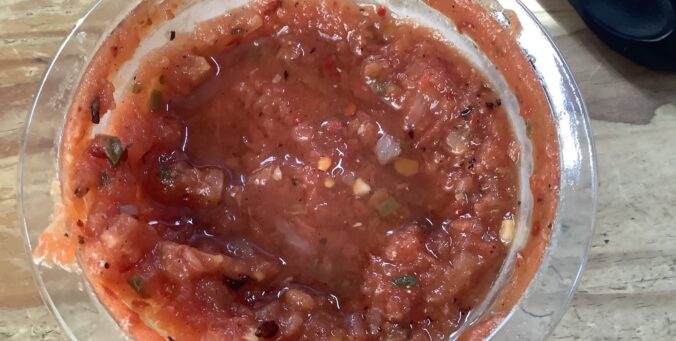
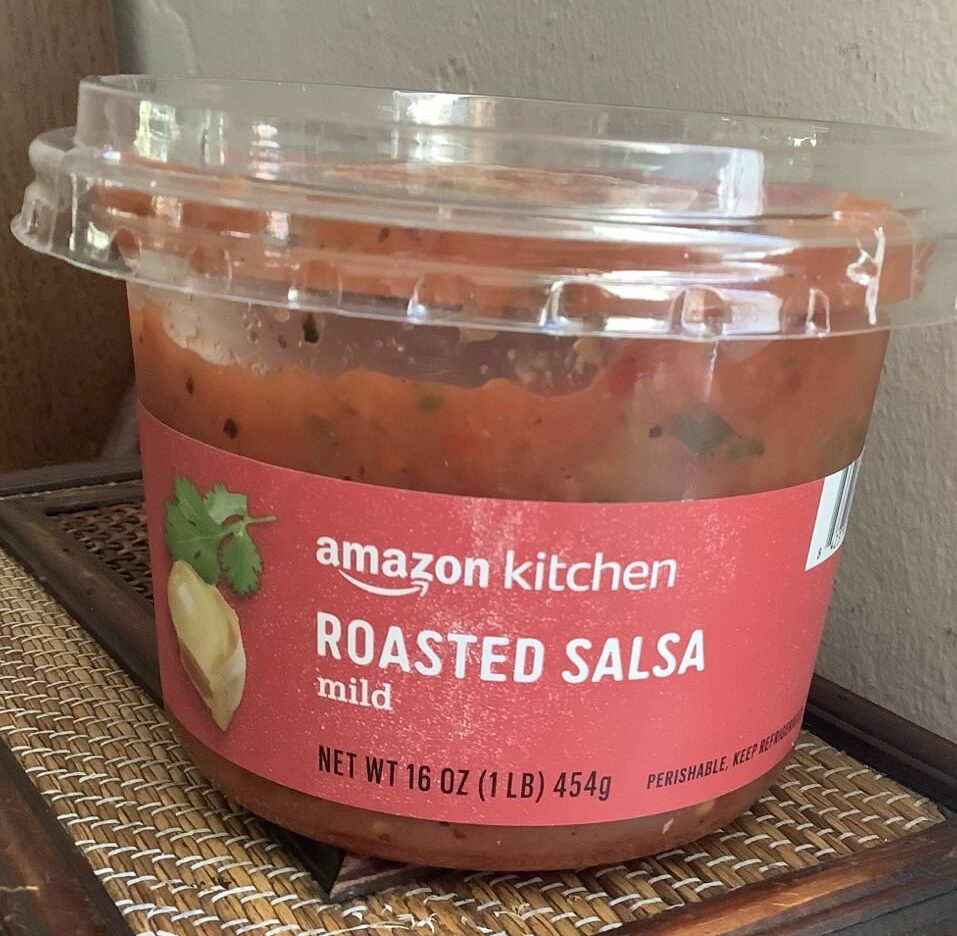
I’m obsessed. It’s been a handful of days since I first discovered Amazon Kitchen Roasted Tomato Salsa, mild, and I have already devoured three 16-oz tubs. I almost fear it’s a medical condition driving me to it – maybe I lack vitamin C, but I have little desired for cooked tomato sauces and I haven’t been craving citruses. Just this salsa.
It reminds me a lot to the salsa that used to be available at Chevy’s. It has a crushed tomato texture (though it’s made with diced tomatoes) and it just exudes freshness. It has the right amount of spice, the right amount of onions and it’s just delicious. Fortunately, i’s also not bad for me – though the tortilla chips I’ve been eating it with, do. The whole tub has 150 calories but 90% of your daily limit for sodium. Let’s be honest, though, I always exceed that.
Before trying this salsa, I tried Amazon Kitchen Pico de Gallo Salsa, and I was not too happy with it. I tend to prefer pico de gallo to salsa because it usually tastes fresher, but this was not the case here. Even though it was a fresh, refrigerated salsa it evoked the shelf-stable jarred stuff. That one, I wouldn’t get away.
The great thing about Amazon fresh salsas is the price. They are currently $2.70 for the 16oz tub. That’s almost half the price of Safeway’s version.
This year, I gifted myself the Bonne Mama Advent Calendar. It was on sale for $35 at World Market (30% off its $50 regular price) for Black Friday, and I appreciated the idea of having an advent calendar I could not only use daily, but share and review! I’m not the biggest jam aficionado in the world, but I do like it on bagels with cream cheese or toast and butter. BTW, in this review I’m using the words jam and spread as synonyms.
Bonne Mama’s advent calendar has become very popular, it’s sold out every year until now. This year, they made four times as many, which is why I was able to easily find it and at a discount!
The calendar comes in a nice, sturdy cardboard box, with 24 individual numbered boxes, each with a mini 1-oz jar of jam inside. The boxes were a tad hard to open, but they are a nice size. I love that the whole calendar is reusable! I can cover the identifying information on the main box with a different label, and the little boxes just have numbers. The jars are made of glass and can be washed and reused as well. Little jars like these are great to store small amounts of spices, but also beads and even medicines. You can even use them as mini flower pots. I love them.
Note that the jams have different expiration dates – while some are well into 2027, others expire in mid-2026. This means that you might not want to buy one this year to gift next year (a thought that occurred to me after day four, given how much I was enjoying the calendar). Hopefully they’ll be just as easy to find in 2026.
One final note, in the list of ingredients Bonne Maman often lists brown sugar as “brown cane sugar,” which suggests to me that the white sugar they use is not cane sugar but beet sugar. Indeed, that’s what Gemini AI suggests. This might be why their jams are too sweet and not as delicious as the ingredients would otherwise suggest.
The first box, December 1st, came with Wild Blueberry – Maple Syrup spread. I don’t think I’ve had a jam with maple syrup before, and on its own, the maple syrup does overwhelm the flavor of the blueberries. The flavor is so strong that is almost molasses-like, though still clearly maple. I served it on a buttered Engish muffin, and here it mellowed and I could actually taste the fruit. In all, it was quite good, interesting tasting, and I can see myself buying it.
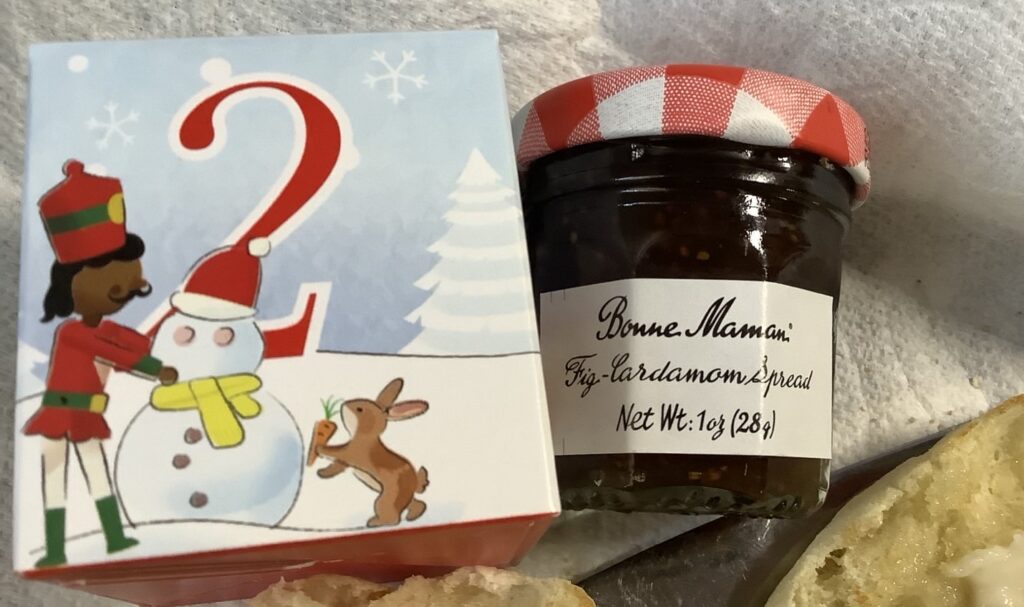
Day 2 gave me a Fig-Cardamon spread (purple figs, sugar, cardamom, concentrated lemon juice, fruit pectin). This was rather disappointing. On a buttered English muffin, it just tasted sweet – with no discernable fruit flavor. The sugar overwhelmed the fig flavor when tasting it by itself as well, and I couldn’t detect the cardamom at all. I wouldn’t buy it.
On day 3 I got a Plum-Pear-Star Anise spread (plums, pears, sugar, brown sugar, star anise extract, concentrated lemon juice, fruit pectin). This, to me, tasted just like those fruit hard candies, often with a soft inside, grandmothers everywhere used to have at home. It had a bright, fruity and sweet flavor – but you can’t really taste any individual fruit, much less the star anise. It is pleasant, it feels like a very happy, summery flavor and while I’m not sure I’d seek it out, I definitely enjoyed it. Come to think of it, just like grandma’s candies.
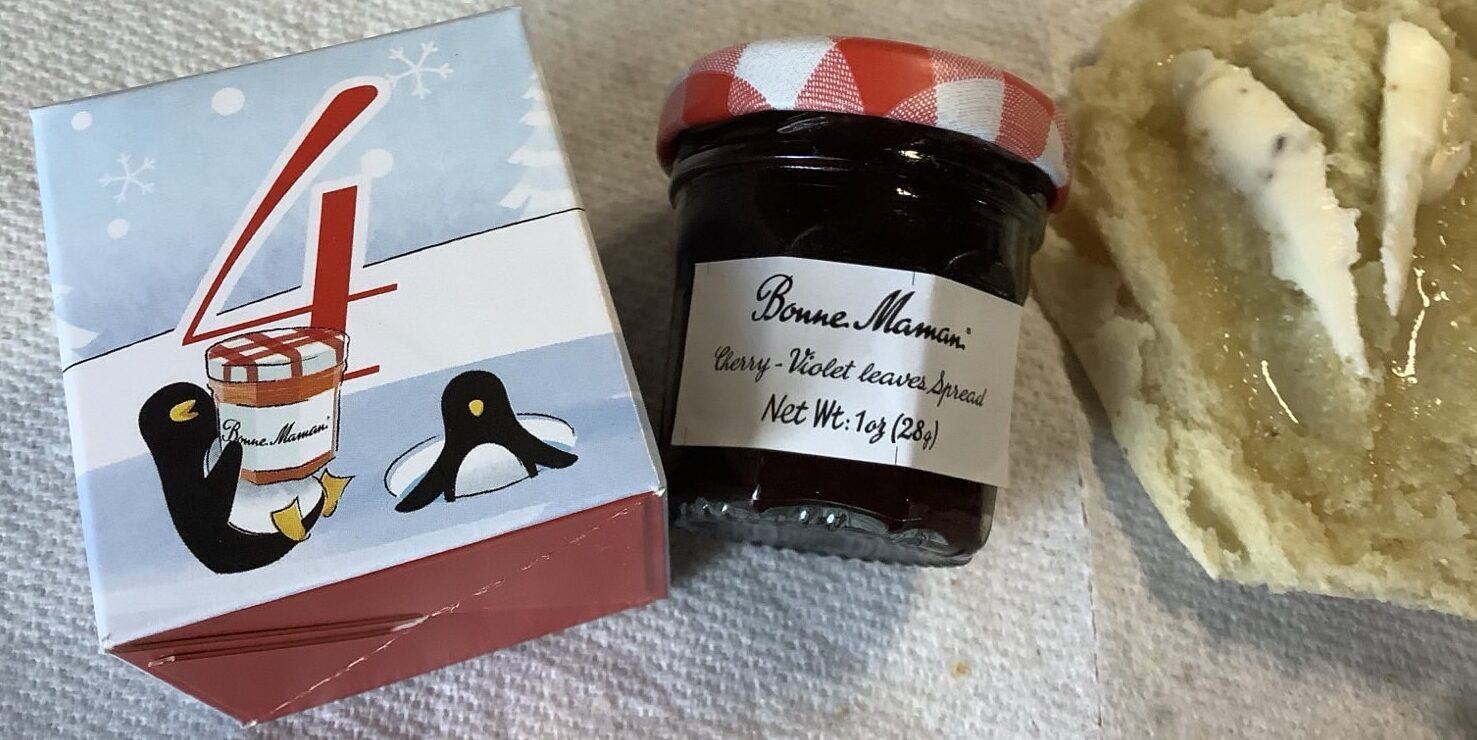
It’s day 4, and I’m still really enjoying this calendar. Today I got a Cherry – Violet leaves spread (cherry, sugar, brown sugar, violet leaves extract, concentrated lemon juice, fruit pectin). I don’t like cherries – or cherry flavored candy – so I wasn’t too hopeful for this jam, but it’s the one I liked the most so far. That’s because the cherry flavor was relatively mild, and instead it had a generic, yet very deep, “red fruit” (berry) flavor. That, or I’ve started to enjoy cherries. It was very sweet, something I don’t really like about Bonne Maman jams, but this time the sugar added to the fruit rather than compete with it. I have no idea what violet leaves taste like, so I’m not sure what, if anything, they added to the jam – but they definitely didn’t substract from it. Once again I had it on buttered English toast. The flavor wasn’t distinct or special enough that it would make me rush to buy a large jar, but I did enjoy it.
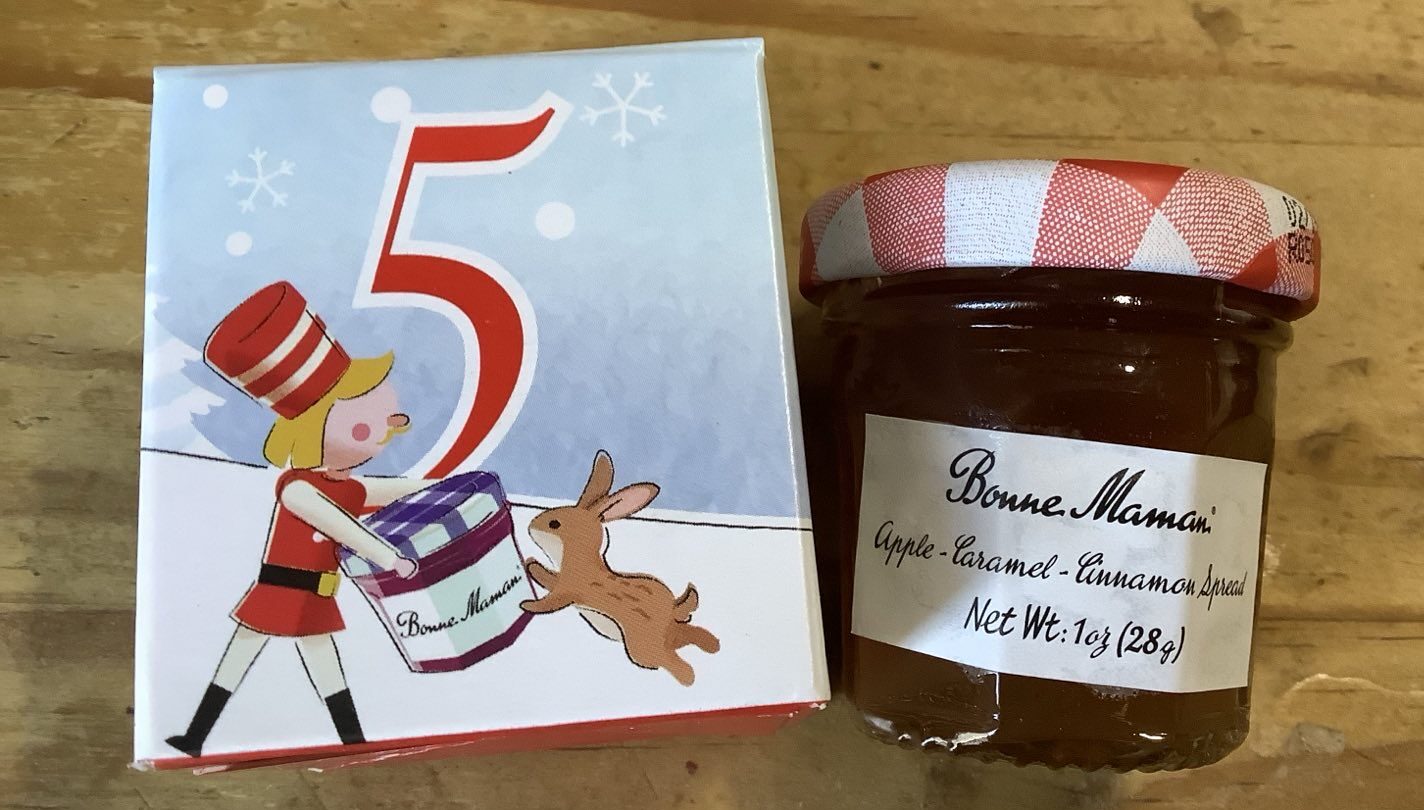
Day 5 gave me an Apple – Caramel – Cinnamon spread (apples, sugar, caramel, cinnamon, concentrated lemon juice, fruit pectin), which brought me back to my childhood. 1979, exactly. That year, I tasted apple and pear jams for the first time. The cousin of a close friend of my father was making/selling them, and he brought some for us to try. I fell in love with them, but haven’t really bought them (or even seen them) over the years. This jam, by itself, tastes very much like a sweet apple pie. I wish the apple flavor was a little bit more forward – that is to say, I wish it wasn’t as sweet – but this seems to me the complaint about all jams. In my old age, I like things less sweet. I ran out of any bread items on which to spread the jam, but will report later when I get one.
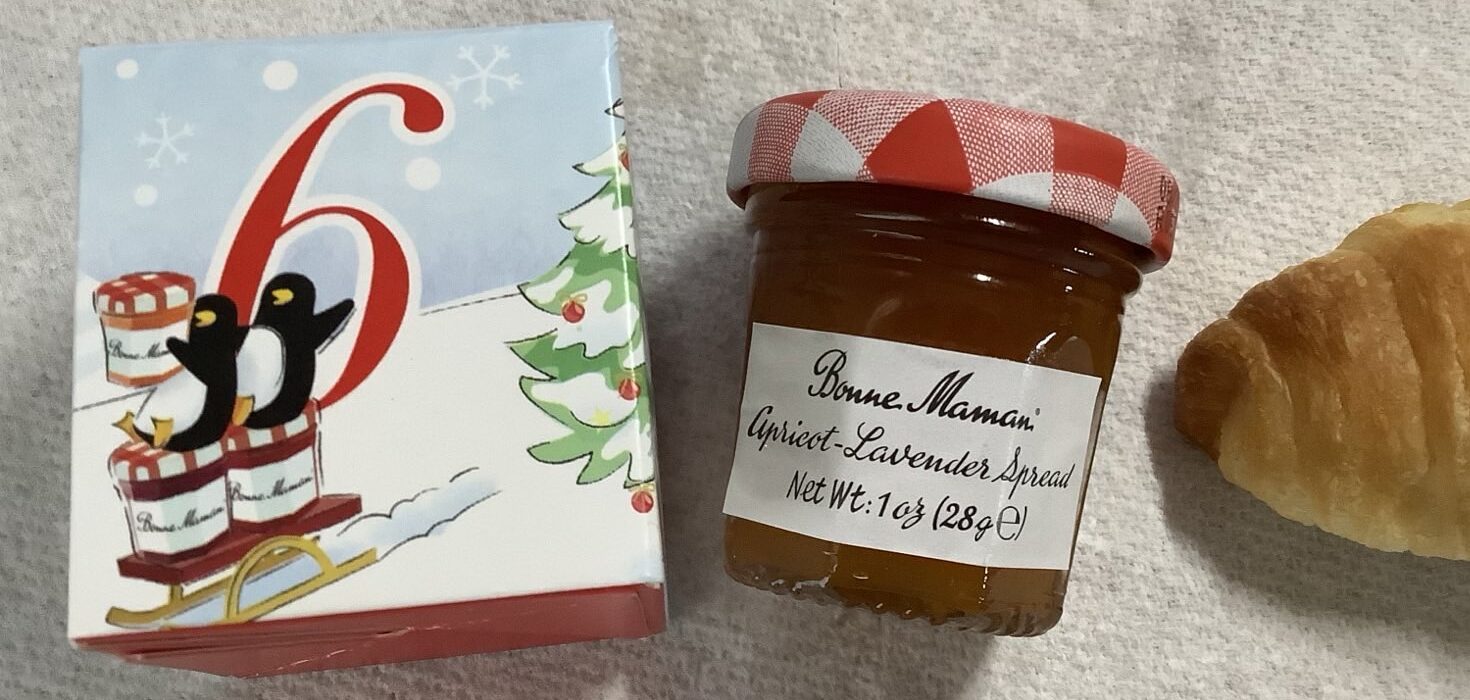
Bonne Maman has done a great job of not only creating a plethora of new jam flavors for the calendar, but of pacing them so that every day you go to a pretty different fruit than the day before. That’s how on day 6 we got to Apricot – Lavender spread (apricots, sugar, brown sugar, lavender extract, concentrated lemon juice, fruit pectin). I’ve never been a fan of apricot jam. Like with orange marmalade, apricot jam is what parents and grandparents used to serve when I was a child, and I always suspected that it was because they were cheaper than berry jams. In my middle age, I’ve become to appreciate them more. I do wish that this jam was more fruit forward, but that’s my general impression of all of Bonne Maman’s jams: they are too sweet and therefore they don’t let the flavors of the fruits shine. I did enjoy it on a mini-croissant. That said, I probably wouldn’t buy it and instead would look for a low-sugar version.
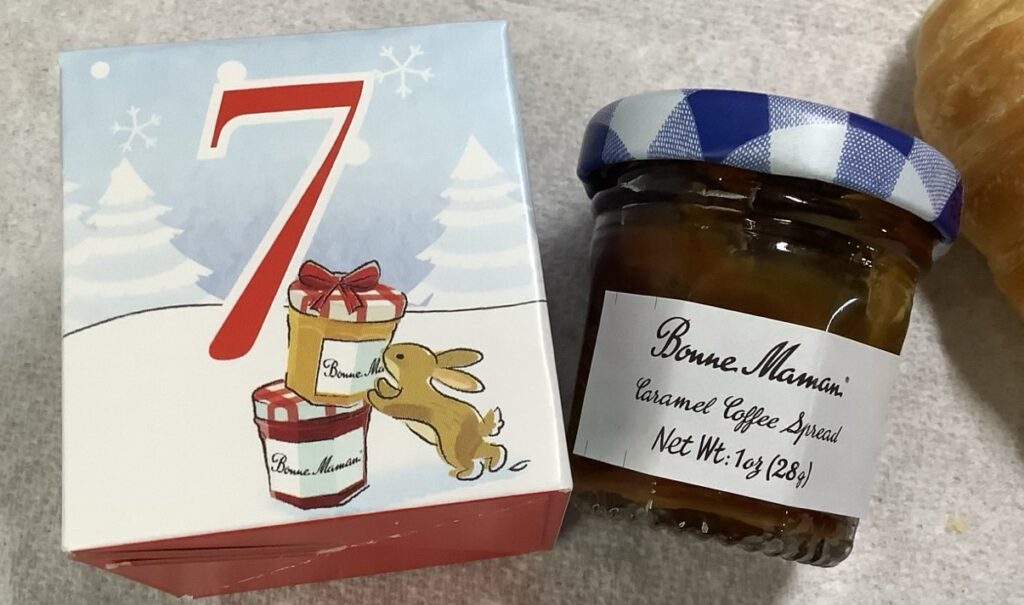
I was excited when I opened my day 7 box to find a little jar with a blue lid! I had never seen one before. I imagined it’d be a boysenberry flavor, but I was totally wrong. It was Caramel Coffee spread (sweetened condense milk, glucose syrup, sugar, water, coffee extracts, fruit pectin, salt, sodium citrates). I’d had coffee flavored dulce de leche (aka arequipe) in Colombia, so I knew what to expect, but was still pleasantly surprised. The texture was a little weird – it seemed to have a hard/filmy surface, but it was thinner and lighter than most dulce de leches -, but the flavor was spot on. It has an intense coffee flavor, but the happy, easy sweetness of dulce de leche. It’s delicious. It’s going to be hard to keep from eating it all – I want to save it for when my daughter is home from college.
Unfortunately, Bonne Maman doesn’t regularly offer this spread, though I think it was in last year’s advent calendar as well, but I saw that Stonewall Kitchen now offers a coffee caramel sauce, albeit one that seems slightly less natural than Bonne Maman’s and potentially more liquidy.
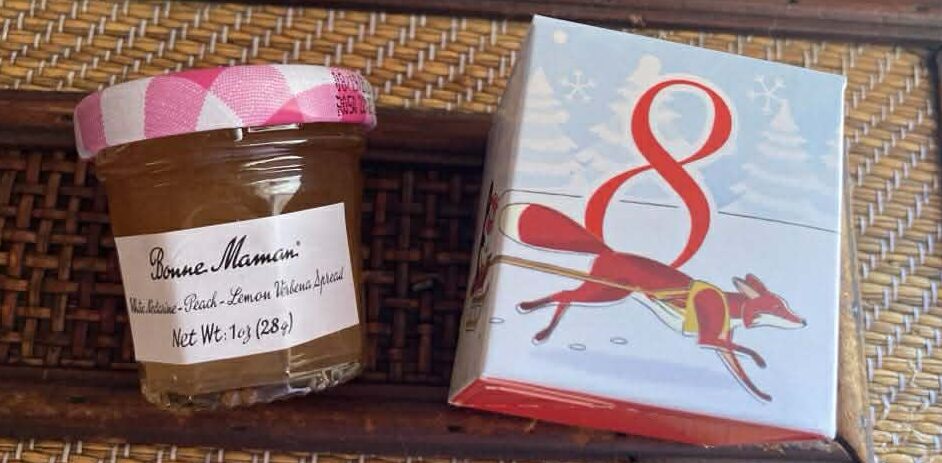
I’m loving how different the spread flavors are from day to day. Day 8 brought me White Nectarine – Peach – Lemon Verbena spread (white nectarines, peaches, sugar, lemon verbena extract, passion fruit juice, concentrated lemon juice, fruit pectin).
If I didn’t know what this jam was made out of, I don’t think I would have guessed. Unlike every other spread so far, for which the second element was usually imperceptible, this one tasted mostly of lemon verbena. It was surprisingly acidic – and bright. Indeed, the acidity was such that the spread didn’t even feel as sweet as all the other ones. Overall, I liked it. A little goes a long way. In addition to eating it on a mini croissant, I had some on a bit of pound cake and it stood well to its sweetness. In all, a successful flavor.
Day 9 is dulce de leche. Not in name, it’s described as a Madagascar vanilla Caramel Spread (sweetened condensed milk, glucose syrup, sugar, water, Madagascar vanilla extract, fruit pectin, salt, sodium citrates), but it’s basically dulce de leche, albeit one made from condensed milk rather than the old fashioned way. Traditional dulce de leche is made by mixing milk with sugar, adding a vanilla bean, and cooking it slowly, over hours, stirring frequently. The milk and sugar caramelize together bringing a depth of flavor you wouldn’t otherwise have. Before the era of free trade, it was impossible to get commercial Argentine dulce de leche in the US. You had to make it. I tried once or twice, unsuccessfully. I just don’t have the patience and both times I burnt it. For years, then, I used the trick of making dulce de leche from cans of condensed milk. You basically simmer the cans for a couple of hours (if I remember correctly), making sure they don’t explode on you. I’ve never had that issue, fortunately. The results were never quite as good – whether that’s because they lacked vanilla or because the caramelization process didn’t work quite as well, I’m not sure, but I was definitely happy when free trade made Argentine-made dulce de leche available in the US.
Around the same time, Haagen Daaz started to popularize dulce de leche with its dulce de leche ice cream. There are now a number of US made brands of dulce de leche, though several seem to use the condensed milk method, Bonne Maman among them. Bonne Maman’s caramel spread was quite good, but a little runnier than I’d have preferred, and with a stronger flavor of vanilla. That wasn’t a bad thing, it gave it a more grown up flavor. Argentine brands have mostly been using fake vanilla for years now, so that may also be the difference.
In all, I liked it but I wouldn’t buy it over regular dulce de leche.
Happy International Human Rights day! Though the United States has made a mockery of human rights for decades now, and is now working to normalize genocide and crimes against humanity, it’s a good time to remember that human beings have fundamental rights and that we need to fight for them.
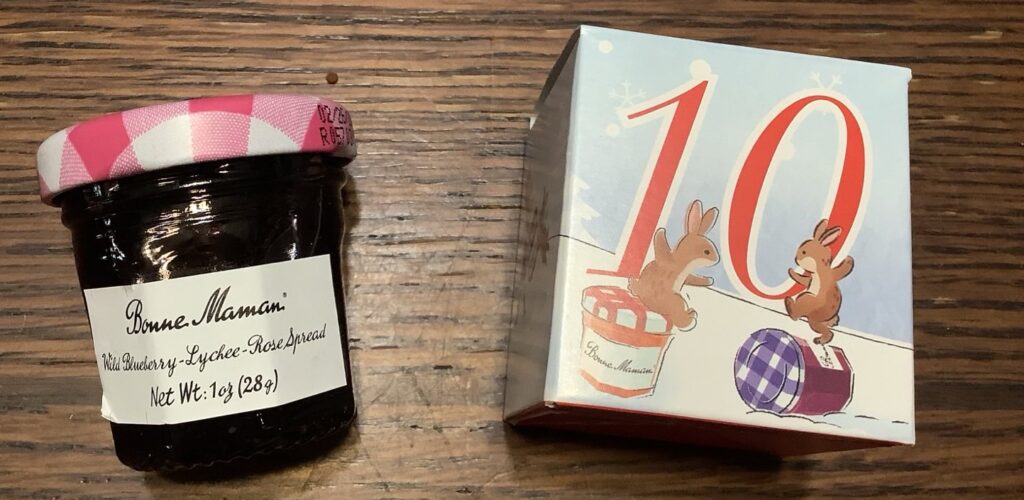
Jam, alas, is not a fundamental right, but I continue to enjoy my Advent calendar. Today I got to try Wild Blueberry – Lychee – Rose (wild blueberries, lychee, sugar, brown sugar, rose extract, concentrated lemon juice, fruit pectin) spread and from the start it was one of my favorites. The main reason was the aroma; I hadn’t noticed that the other jams were pretty aroma-free but this one smelled of jam, and therefore of childhood, as soon as I opened it. It was also one of the few jams in which I could taste its different elements. The berry element was quite pronounced, what the jam smelled of, but you can definitely taste the rose extract. Rose can be easily overwhelming, but it was used judiciously in this spread – enough as to temper the acidity and sweetness of the blueberries and lychees, but not enough to be in the foreground. I don’t know the flavor of lychees well enough to taste it, but it definitely helped modify that of the blueberries, making it brighter and happier. I enjoyed it very much and I’d buy it.
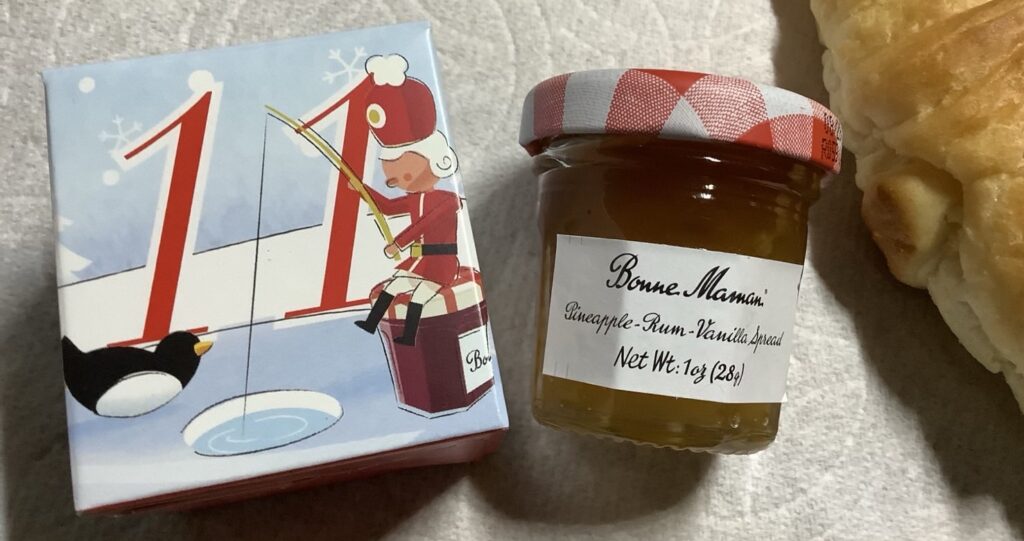
Day 11 and a very different jam today: Pineapple – Rum – Vanilla spread (pineapple, sugar, brown sugar, rum, vanilla extracts, exhausted vanilla seeds, concentrated lemon juice, fruit pectin) . This one I’m not very enthusiastic about. If you eat it by itself, you can taste the pineapple, but not the rum or vanilla. On a croissant, however, it just tasted sweet. Fortunately, it didn’t taste too sweet, but the pineapple flavor was too subtle to distinguish it. As a generic jam, I don’t object to it, but that’s all it is.
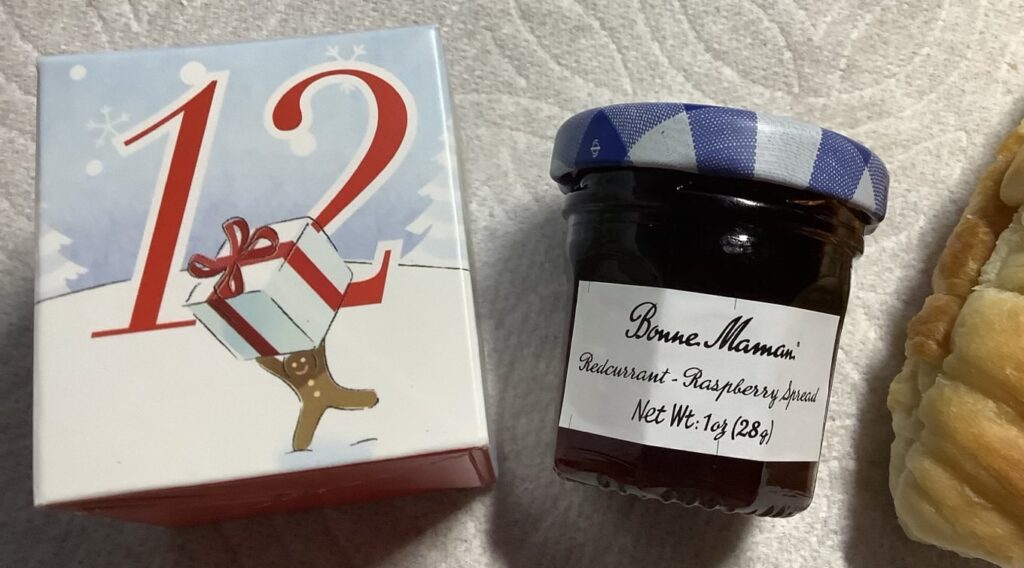
We are half way through the calendar now! And today’s flavor is one of my favorites: Redcurrant – Raspberry spread (red currants, raspberries, sugar, brown sugar, concentrated lemon juice, fruit pectin). I like raspberry jam, but I often find it too intense for me. The addition of the red currants tempers it, and the resulting combination is one of nice, bright and very distinctive berry flavor. Here you taste the berries before the sweetness. I’d definitely buy this if it was available.
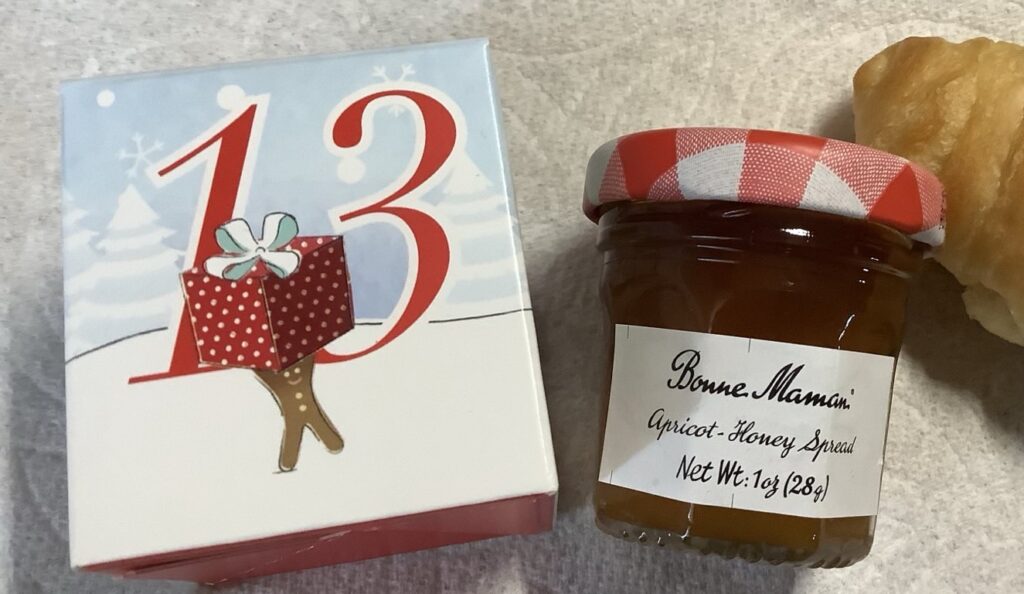
Day 13 has brought us our second apricot jam of the season, Apricot – Honey spread (apricots, sugar, honey, concentrated lemon juice, fruit pectin). Here, I can taste both the apricot and the honey. I like it more than the one before, either because it’s less sweet or because I’ve become accustomed to it. I prefer it by itself than on my croissant, as I can taste the apricot better.
We are getting close to Christmas and today we got Mango – Ginger Spread (mangos, ginger, sugar, brown sugar, concentrated lemon juice, fruit pectin). I’ve noted in the past that you can’t taste the complimentary ingredients in many of Bonne Maman’s spreads. That’s definitely not the case here; pretty much all you can taste is ginger. Yes, the mango gives it a generic fruitiness, but you can’t tell it’s mango because the ginger is so overpowering as a flavor. Now, I like ginger, and I liked this spread well enough – maybe not enough to buy it if it was available, though -, but if you are not a ginger aficionado, this probably would not be for you.
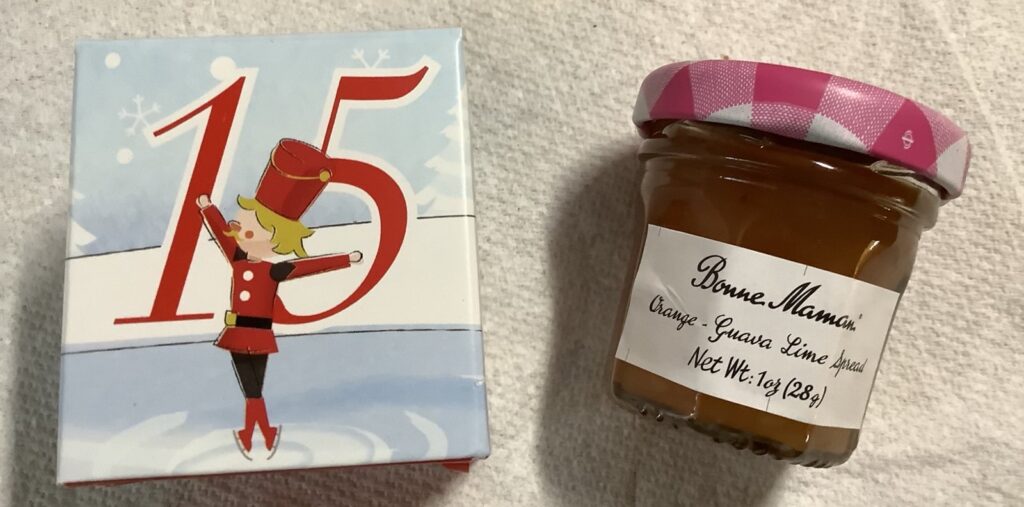
Heaven. That’s the only way to describe Day 15’s Orange – Guava Spread (sweet oranges, guava, lime, concentrated lemon juice, fruit pectin). I can’t believe no one thought of this combination before – it’s really, really perfect. Of course, I love both orange and guava spreads separately, so it’s not surprising that I’d love them together. But together they are really more than the sum of their parts. The bitterness of the oranges counteracts the sweetness of the guava, allowing both flavors to burst through (though the guava flavor is ultimately more prevalent). I haven’t found anyone who makes orange guava spread, but I’m going to try just buying both and combining them. Wish me luck.
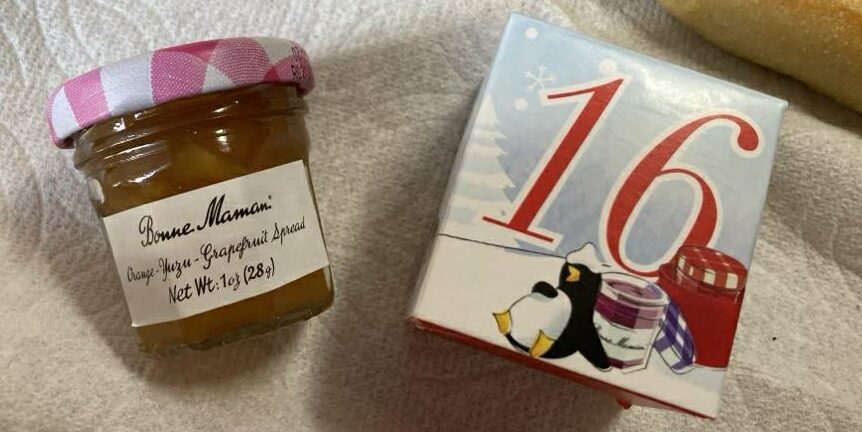
Orange spread twice in a row, and I think I might love Day 16’s Orange – Yuzu – Grapefruit spread (blood oranges, yuzu, grapefruit, sweet oranges, sugar, brown sugar, concentrated lemon juice, fruit pectin) even more than yesterday’s. Unfortunately, this one will be impossible to replicate. But boy, is it good! You can taste all of the citruses here, independent of one another. Together, they balance each other beautifully. This jam is pure genius, and I want more!
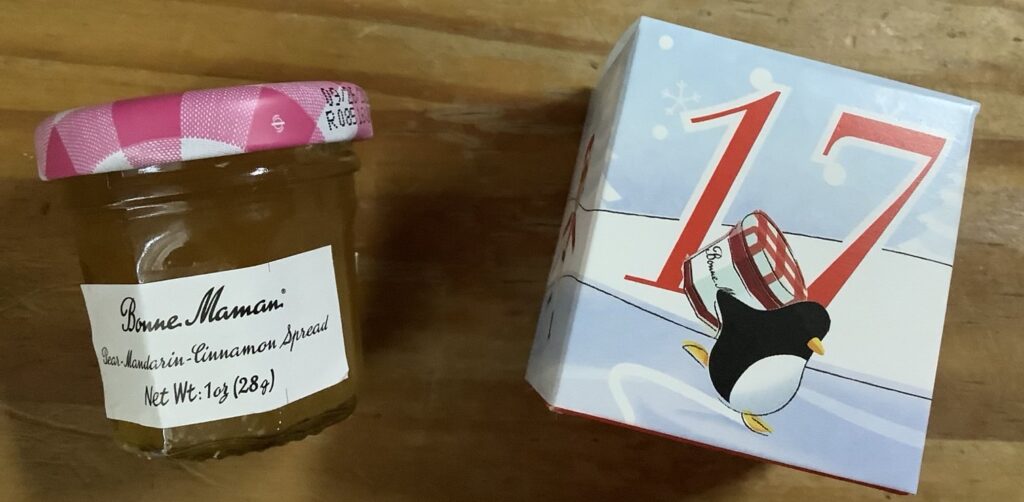
Day 17 brings us a third orangey spread in a row – at least in theory. Today we got a Pear – Mandarin – Cinnamon spread (pears, mandarins, sugar, brown sugar, cinnamon, concentrated lemon juice, fruit pectin). When I tried the jam on a spoon, I couldn’t taste the mandarin at all – not even as in acidity. Instead, this tasted just like a cinnamon pear jam. I’m not a huge fan of cinnamon, so I didn’t enjoy it as much as I wished. On a croissant, on the other hand, the cinnamon was almost imperceptible and the mandarin shined. I liked it far better.
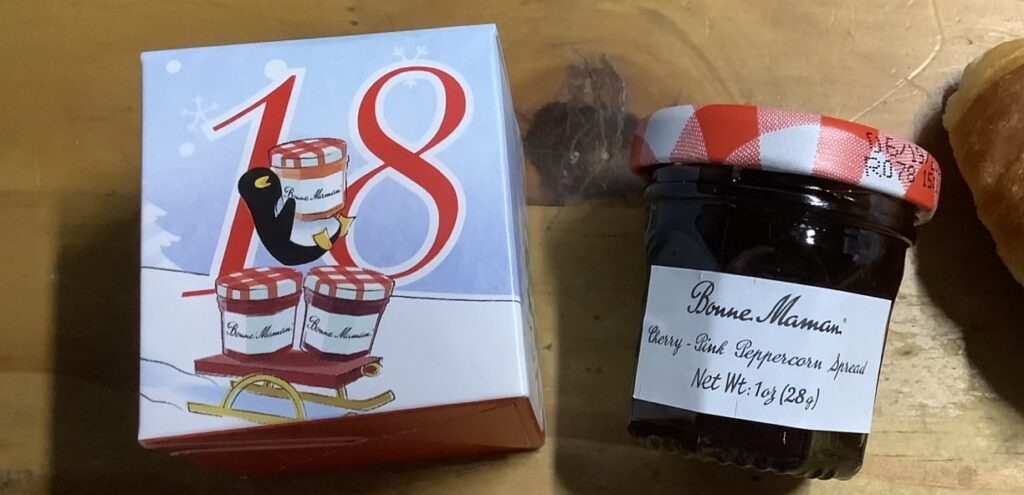
It’s cherry spread again on Day 18. To be precise, today we got Cherry – Pink Peppercorn Spread (black cherries, morello cherries, sugar, brown sugar, pink pepper, concentrated lemon juice, fruit pectin). I have to say it wasn’t my favorite. I didn’t mind the cherry flavor itself, I’m not sure I could tell it was cherry, but the flavor of the pepper was very distinctive. I just don’t like the taste of peppercorns. If you do, you probably will like this jam. It wasn’t actually spicy either, though I wouldn’t necessarily have minded some heat.
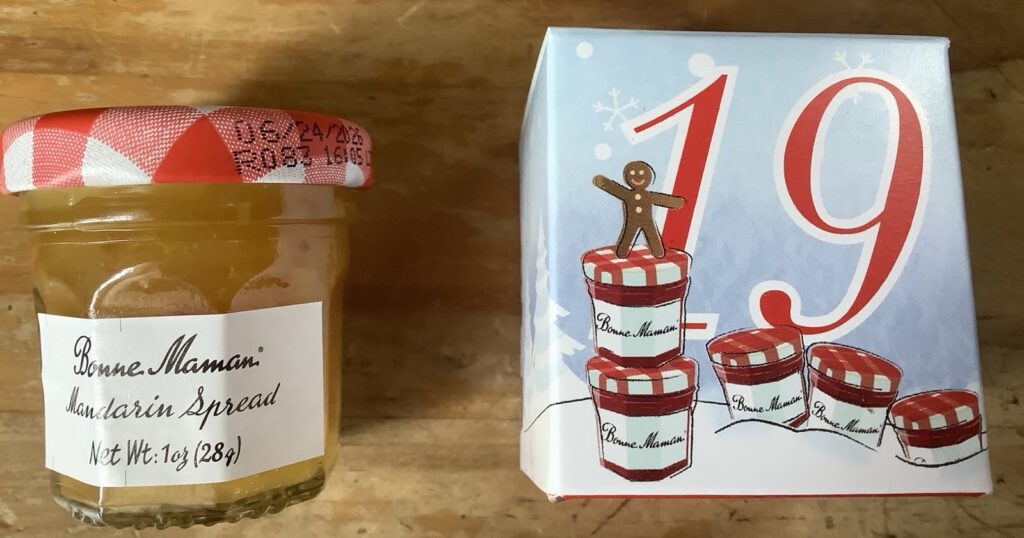
On Day 19 we are back with the orange jams. Today we got a plain Mandarin Spread (sugar, Italian mandarins, water, concentrated lemon juice, fruit pectin). It was quite good. It had hints of bitterness and acidity, but was overall sweet and balanced. The mandarins tasted like orange, but I think it’s hard to preserve the particular mandarin flavor in a jam. I did compare it with the Bonne Maman’s orange marmalade and the Wilkin & Sons ‘Tiptree’ Orange Marmalade I had in my fridge. The Wilkin & Sons marmalade is bitterer and contains pieces of peel, which appeals to me. The Bonne Maman’s orange marmalade is smoother and more uniform in flavor. The mandarin spread, meanwhile, also has little pieces of peel and is a bit more bitter. Overall, I think I’d buy it as a less challenging orange marmalade than the Wilkin one.
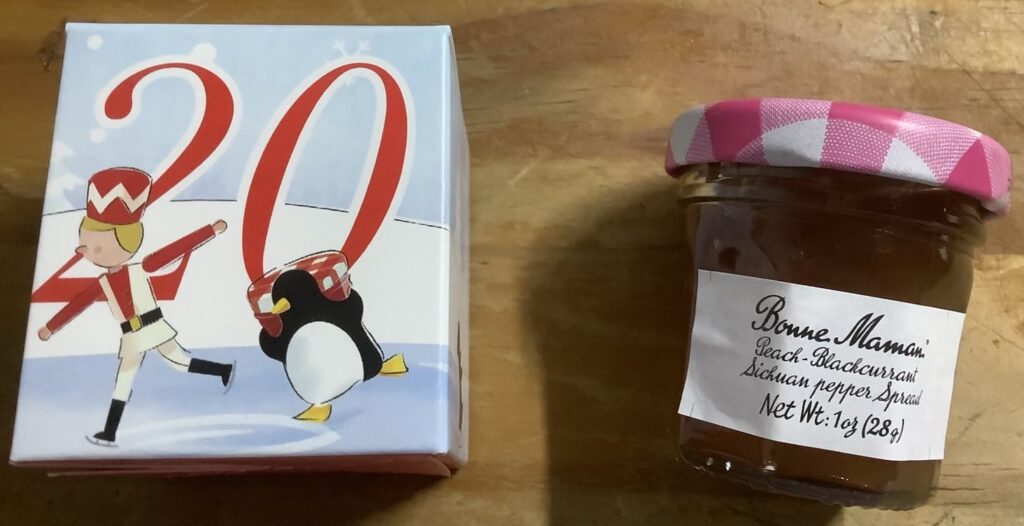
Oh, no! Day 20th has brought us another peppercorn spread. This time we got Peach, Black Currant, Sichuan Pepper Spread (peaches, blackcurrants, sugar, brown sugar, Sichuan pepper, concentrated lemon juice, fruit pectin). This time, fortunately, the flavor of the peppercorns was much more subtle, it exists as a weird aftertaste, somewhat metallic and hinting of spiciness, but not really on your face. I do feel some lip tingling after eating it, though. The primary flavor is that of peach, the blackcurrant mellows it somehow without being actually distinct. It’s not my favorite jam, but it’s overall interesting.
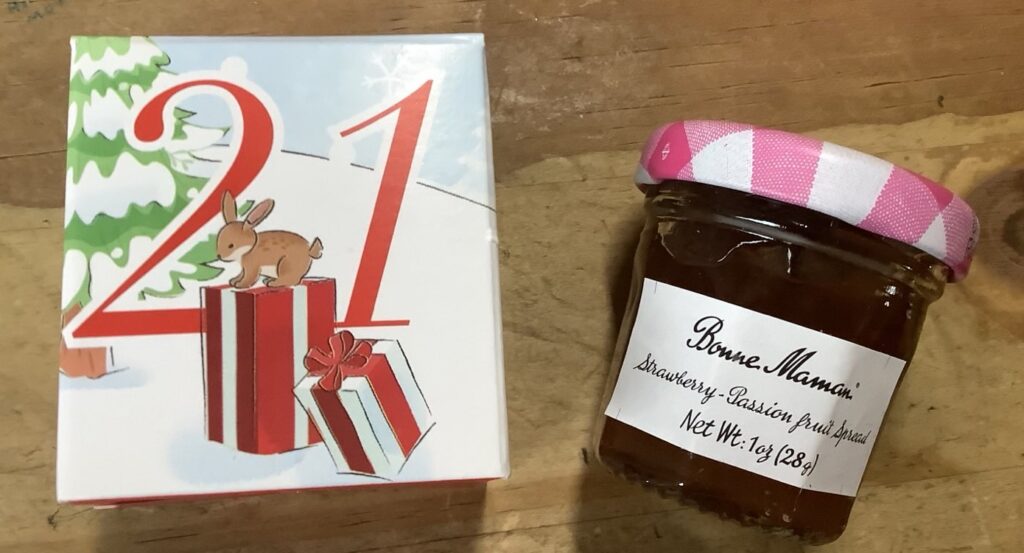
I was super excited to see that Day 21 was Strawberry – Passion fruit Spread (strawberry, passion fruit, sugar, brown sugar, concentrated lemon juice, fruit pectin). Strawberry jam is my favorite (or was before I became an orange marmalade devotee) and I thought the addition of passionfruit would be interesting. However, I’m very particular about my strawberry jam. My favorite is actually Smucker’s low sugar strawberry preserves, because the low sugar really allows the strawberry flavor to break through. Most strawberry jams are too sweet, hiding the fruitiness of the strawberries. Unfortunately, this was the problem with this jam as well. It tasted like your run of the mill, oversweetened strawberry jam. It wasn’t fruity enough and the passionfruit didn’t add anything to it.
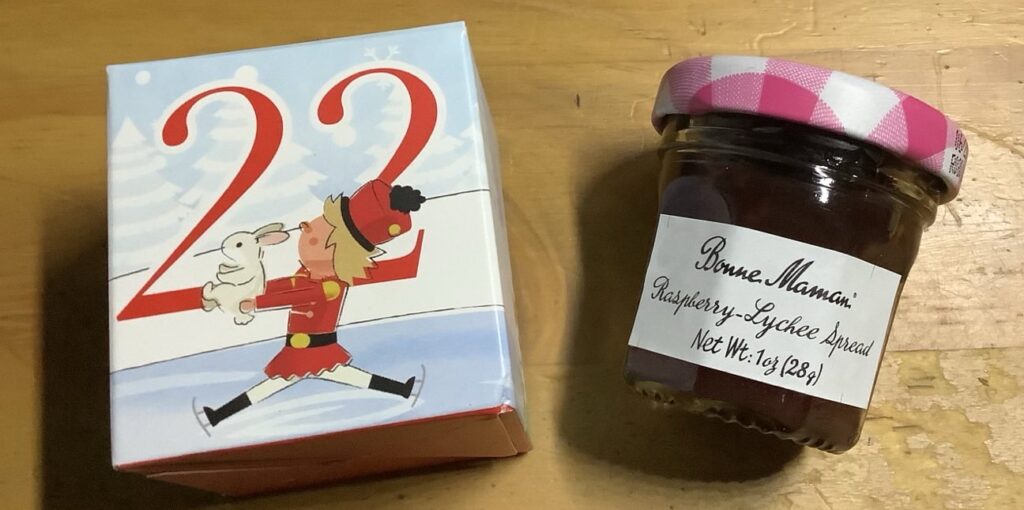
Sometimes I forget just how good raspberry jam can be, Day 22nd Raspberry – Lychee spread (raspberries, lychees, sugar, brown sugar, concentrated lemon juice, fruit pectin) reminded me. Despite the lychee, it tasted like just a raspberry jam but that’s good enough.
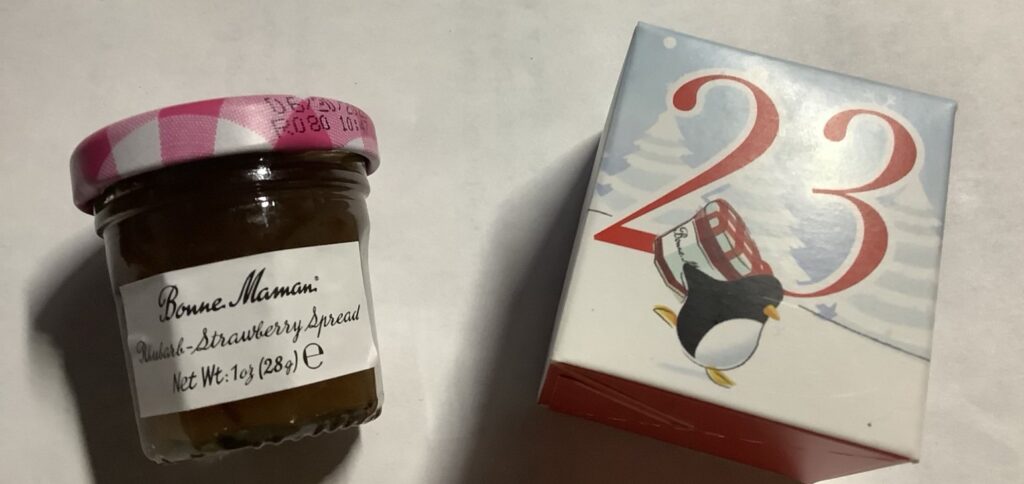
Day 23, our next to last day, has brought me Rhubarb Strawberry spread (rhubarb, strawberries, sugar, brown sugar, concentrated lemon juice, fruit pectin). Truth be told, I’m not very familiar with rhubarb, though I know it’s often used to accompany strawberries in pie. I’ve never tried it by itself, so I have no idea what it tastes like. What I can tell you is that it doesn’t work for me on this jam – though I’m not sure if the problem is with the rhubarb or with too much lemon juice. Basically, this jam is too sour. The sourness hides the fruitiness of the strawberry. The sweetness is still there, but I daresay it comes from the sugar and not the fruit. In all, it’s not very enjoyable. I wouldn’t say it’s bad, it’s just not a jam I’d seek out.
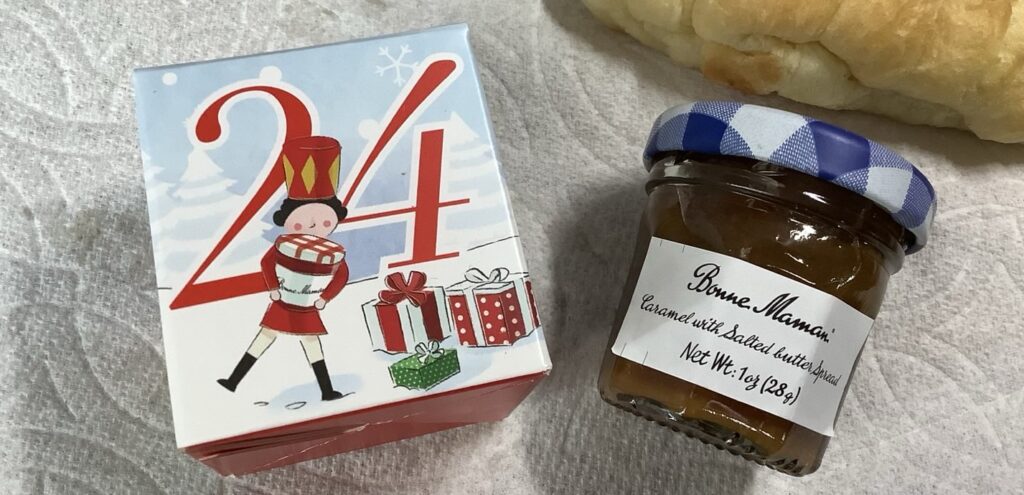
And it’s Day 24, the last day. Fortunately, we are going away with a bang. Today we got Caramel with Salted butter spread (sweetened condensed milk, glucose syrup, sugar, salted butter, water, fruit pectin, salt, sodium citrates) and it was delicious. It tastes just like a salted caramel, if you are a fan of those (and I am), you’ll love this. It has a thicker consistency than the other caramel spreads, and it’s a little bit more acidic, but overall it’s really, really tasty. I wish they made it all the time.
And that’s it! I had the best time with this advent calendar, I can totally understand why it became so popular. Discovering a new flavor every day was so much fun as it was to write about them. And now, of course, I’m left with enough jam for several months (I’m not a huge consumer). It’ll be great to revisit them as the year goes on.
Last night I got take out from Wonderful Cafe, the Hong Kong restaurant that has opened in the Le Soleil space. I loved Le Soleil for many years, before it became tired and I stopped going, so I wasn’t necessarily sad to see it go – but I wish a better restaurant had taken its place.
I didn’t go to pick up the food, so I can’t tell you about the atmosphere and service, but photos I’ve seen online make it seem closer to a cafeteria in style than to the “Asian bistro” look of the 00s and 10s which I so enjoyed. The walls are half painted in a hospital-teal color which I’m guessing is aiming to exude “cleanliness,” I can’t imagine what else.
I ordered the Beef Brisket Clay Pot Vermicelli ($18), which looked nothing like its picture online, and actually consisted of a few cubes of fatty meat, rice and bok choy. There was no vermicelli. The beef cubes were mostly fat, there was very little meat to speak of. The rice was tasty enough in the areas that had been caramelized, but it was mostly insipid. If I hadn’t had a dog to whom I could feed the fat, it would have been a complete miss of a meal. Obviously I wouldn’t order it again.
Mike had the sweet and sour grilled pork ($19.5). It was “just OK.” He found it to be bordering on bland, without the intensity of flavor and just “tastiness” that he was looking for. He wouldn’t order it again.
The people at the restaurants were very nice, they even gave Mike some candied walnuts while he waited for the food. Those were quite good. For this reason, I may give them a try in the future, once they have found their stride and hopefully corrected criticism.
Wonderful Cafe
1515 E 14th St
San Leandro, CA
510-756-6103
Meatloaf is a strange meal. It’s basically a giant meatball, basted with a tomato/ketchup or barbeque sauce, and baked. As far as I know it’s an American invention, and it evoques the cuisine of the poor. Now that beef has become so extraordinarily expensive, it might make a comeback, who knows?
Meatloaf is not part of my culinary repertoire, though I’ve made it a few times here and there.
For some reason, however, once in a while I get a hankering for meatloaf. I don’t quite know why, as this is not something I grew up with, but I do love sweet-savory flavors, and meatloaf, with its sweetened sauce, can often go there.
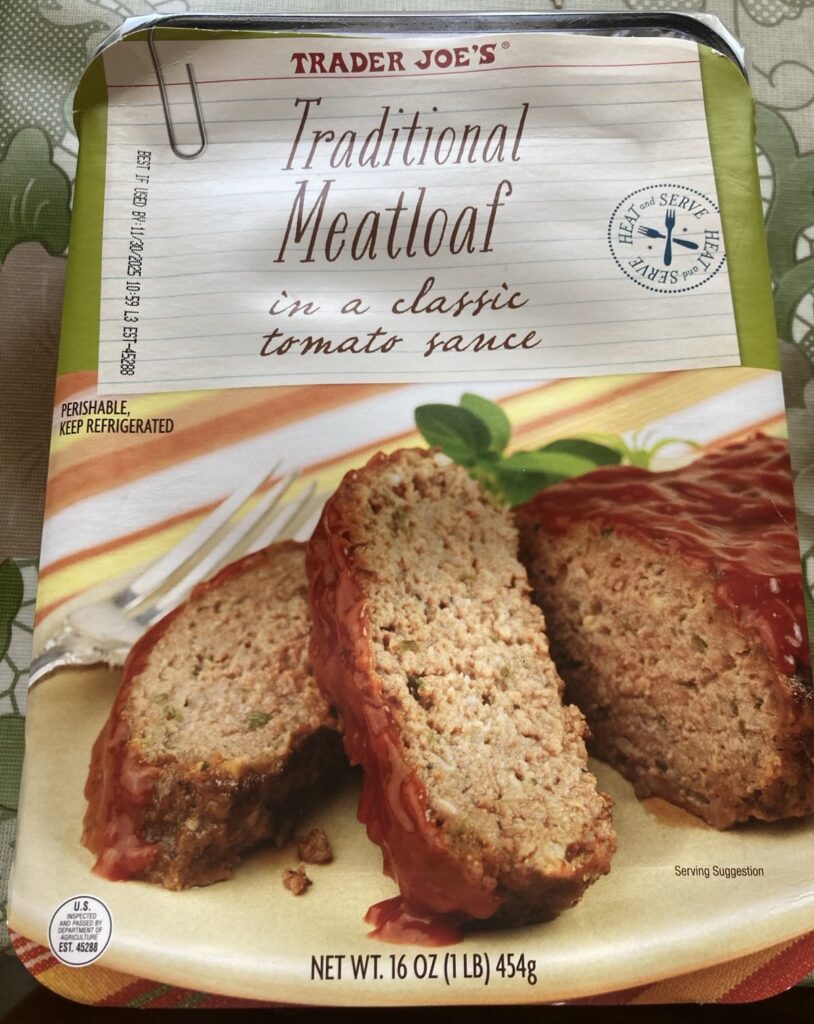
Trader Joe’s traditional meatloaf is sold in the refrigerated section, but it lasts quite a while in the fridge (unopened). The packages have 1lb of meat loaf, so they probably serve 2 people for a meal, more if they are children (though my children tell me meatloaf is the grossest food ever, according to kids in cartoons). I ate it over 3 meals on my own.
I was quite pleased with this version. It wasn’t particularly sweet, but it had a nice, meaty flavor, and the tomato sauce complimented it. The texture was on point, and it was easy enough to slice and microwave. I’d buy it again for when I get a meatloaf hankering.
Good dark chocolate taste, but they are truly mini in size.
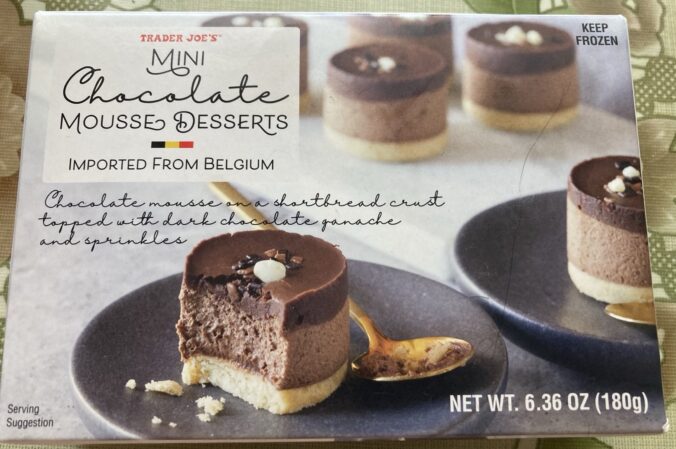
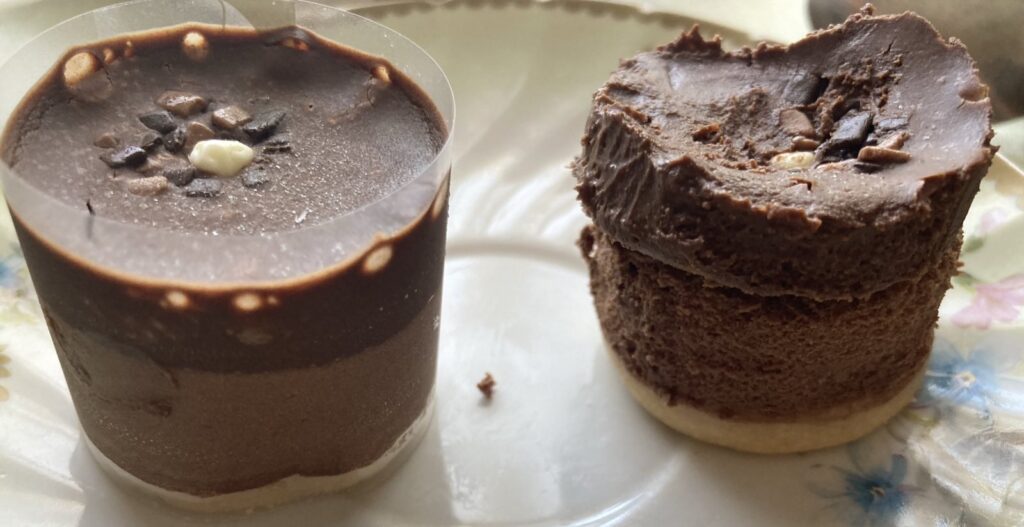
Well, when Trader Joe’s says mini, I guess they really mean “mini”. The photo shows two of these Mini Chocolate Mousse Desserts ($5 for 6) on a tea saucer. They are tiny. But if you are counting calories or carbs, this is a great way to treat yourself. The chocolate mousse has a strong chocolate flavor, a nice variety of textures, and is not very sweet. In all, it’s an elevated version of the Belgian chocolate pudding they used to sell, denser and softer (it’s a mousse, not a pudding) but with a similar flavor profile. I liked them very much.
The package comes with a plastic mold surrounding six mini-mousses. You can presumably remove each mousse while frozen to defrost in the fridge (for at least 2 hours), but I ended up defrosting the whole thing, as it was easier. Each mini-mousse is surrounded by a plastic film. Unfortunately, they didn’t keep their shape when removed while they were thawed. It might work better if you remove it when it’s frozen, if you want to preserve its look.
In all, while they are expensive (thank Trump for his tariffs), they are a high quality treat. They are made in Belgium and contain “cream, sugar, unsweetened chocolate, flour, butter, cocoa powder and cocoa butter” in addition to milk products and emulsifiers. I’d buy them again, as they fit my need for small sweets, but next time I’ll defrost them one at the time.
I’ve been trying to up my game as far as jarred pasta sauce goes, and try some of the more “gourmet” sauces, which are made with actual tomatoes, rather than tomato paste, and more natural ingredients. So far, I haven’t really been impressed with any of these sauces, though perhaps I will need to do my own blind test to see which ones I actually prefer.
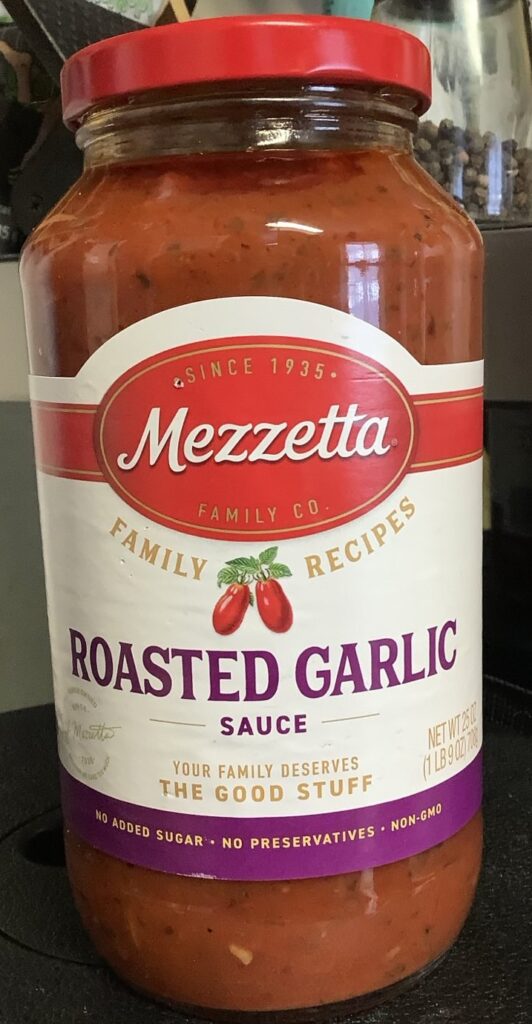
I bought Mezzetta roasted garlic sauce when it was on sale, but it’s usually around $9 at my local Safeway. The tomato flavor is pretty bright, and I did like the relative chunkyness. The roasted garlic flavor was a bit off putting, but that’s my fault for ordering roasted garlic sauce when I’m not the hugest fan of roasted garlic. Mostly, though, I felt it tasted very generic. I’m not sure I’d be able to tell it apart from a cheaper brand.
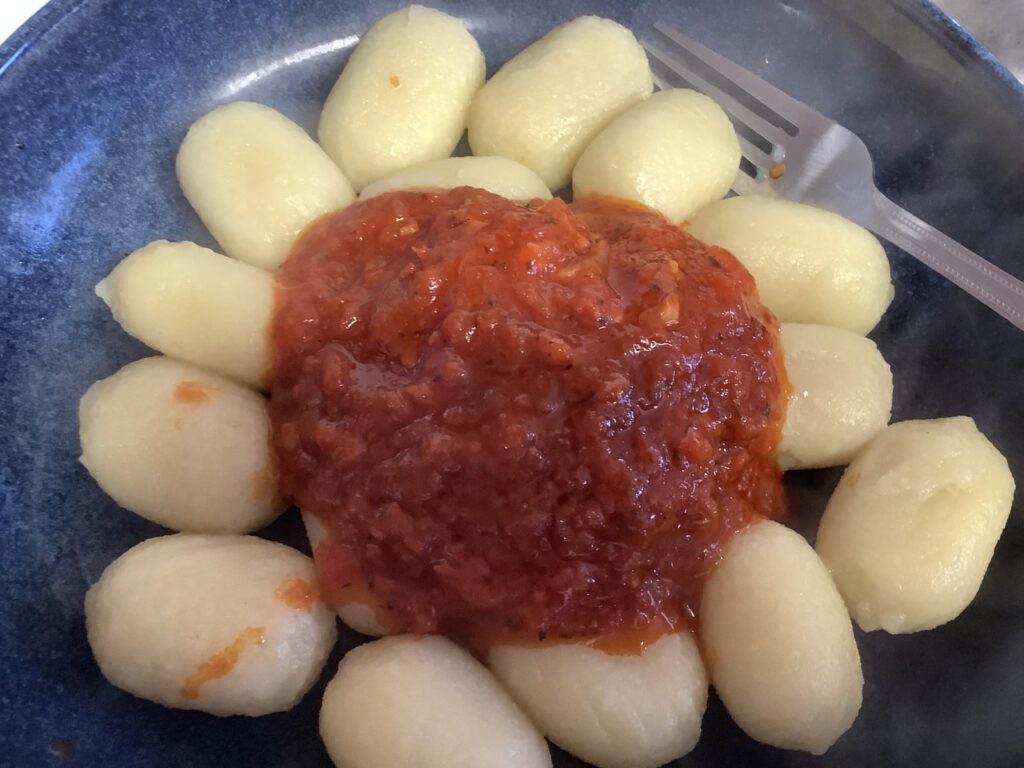
I tried it both on gnocchi and by itself with bread, and I definitely preferred it on its own. I may try another flavor to give it a real chance.



















Recent Comments