 I’ve been watching the British version of Ramsay’s Kitchen Nightmares and I’m enjoying it quite a bit. I’ve watched the American version before, but I never really liked it. Every episode seemed the same and Ramsay was just so mean and cruel to the restaurant owners. The British version (which started in 2004) is much better. Ramsay swears a lot and sometimes he gets into people’s faces, but it looks like he’s honestly trying to help the restaurants get better. Now, it’s true that his formula for success is always the same:
-Simplify the menu: offer just a few dishes that the kitchen can manage and do well
-Use fresh, local ingredients whenever possible
-Simplify dishes: let the quality of the ingredients speak for themselves
-Have a concept behind the menu: whether it be “new American”, “Irish inspired” or whatever
-Play to the local audience: with dishes they will understand and embrace
-Offer good value and competitive prices
-Have great lines of communications between the kitchen & dining room staff
-The manager/chef must have a firm command of the restaurant/kitchen and not be afraid to demand best performance from workers.
-Chefs must learn to delegate/communicate appropriately with kitchen staff
-Promote the restaurant by going to the people
but it seems like a good formula.
All of this makes sense, of course, but it’s surprisingly hard to do. I was surprised (though I shouldn’t have been) about how many restaurants serve commercially manufactured food, stuff they buy frozen and then just reheat in the microwave. It’s easy to understand why: reheating things is much easier than cooking it yourself and while it’s not necessarily cheaper ingredient wise, it saves a lot of money labor-wise. And it’s not a complete surprise that they’re doing this. I expect all the foods served at chain restaurants, for example, to be manufactured at a central facility and then re-heated. And I think we can expect any deep fried appetizer at a regular restaurant to be commercially made, plus only top restaurants have pastry chefs, which means most restaurants must be buying their desserts commercially. But I didn’t realize how extensive this practice was. In France, for example, the majority of restaurants serve frozen food that they pass as the real thing. The food, filled with flavor enhancers of all types, is tasty enough to fool French gourmets so it must be quite good. And don’t think it’s any better in America, tens of thousands of restaurants – including top rated ones like Thomas Keller‘s Bouchon – serve manufactured frozen food. Even Gordon Ramsey himself has been caught serving pre-made food at his restaurants – albeit the food is cooked daily and, supposedly, without preservatives or enhancers. As a restaurant patron, I have to say I’m appalled by the practice. If I want frozen food, I can buy it myself and microwave it. Indeed, I wish these foods were available at retails here.
Even restaurants that don’t rely on manufactured food, may take short-cuts themselves pre-cooking and then re-heating their food offerings or using less-than-fresh ingredients. Indeed, the former is probably what’s going on with Ramsey’s restaurants (though he, himself, has decried that practice). Now, there are a few things out there that can be frozen without any loss of quality (things made with puff pastry, for example) and there are many dishes (stews, braises, soups) that should be made in advance and then refrigerated and reheated before serving (though for things with meats, and in particular chicken, stove-top reheating is preferred). But in one of the restaurants in Kitchen Nightmares they were pre-cooking the hamburgers. Now I suspect that if a restaurant won’t serve you a medium-rare burger, it’s not because of safety concerns but because their patties are pre-cooked. My new rule: if I can’t get a burger medium rare, I’m not ordering it.
Given all this, what I think restaurant reviewers should do from now on is take a look at restaurant kitchens, preferably during dinner service, so they can see whether cooks are cooking or re-heating, though even noting the number of freezers and microwaves can give you a clue as to what they’re doing in that kitchen.
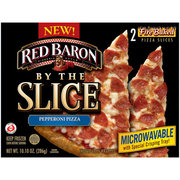 With the kids out of town I haven’t been cooking as much as I normally would, which means I’ve been relying on whatever frozen food I find at
  This week I found Ben & Jerry’s Goodbye Yellow Brickle Road ice cream at Grocery Outlet. This “limited edition” ice cream once again reminds us of the fact that without Ben and Jerry, Ben & Jerry’s ice cream is completely lost. Indeed, how long has it been since they’ve come up with any ice cream flavors that have been successful? By now, all they seem to do is either randomly assemble flavors or play it safe and boringly. This ice cream, as most of its predecessors, is a complete failure. It mostly tastes of mediocre chocolate ice cream, sometimes of caramel, and never of anything special. No wonder it ended up at GO, for $1.50 a pint.
 I haven’t had Sarah Lee Frozen Cheesecake (original or New York) for years, but if you’ve been craving some, GO has the little ones on sale for $2. Seems like a pretty good deal.
 Of greater interest to those of us planning holiday dinners and parties, GO is selling Pepperidge Farm Frozen Puff Pastry Sheets for $2 a package! These usually sell for about $6 a package. Expiration is 12/23/09 – but I’m sure they’ll be fine for Xmas dinner.
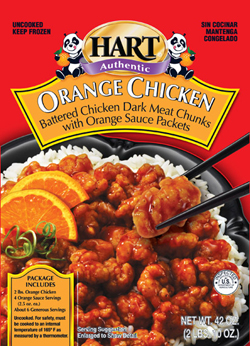 It’s unlikely you’ll find anything if you look for “Hart Authentic Orange Chicken” online – at least I didn’t find anything when I looked. It seems that this frozen entree is made by











Recent Comments