The Japanese have been in America since the late 19th century, but their numbers were limited by a series of anti-immigration laws which targeted them. America attracted both rich Japanese, looking for professional or business opportunities, asylees escaping political strife and laborers looking for jobs. By the start of WWII, there were about 120,000 Japanese and Japanese-Americans in the continental USA, mostly living in the West Coast. The vast majority of them were put in internment camps during the war.
The story is different for the Japanese in Hawaii, who started immigrating to the islands when they were still an independent kingdom. By 1920, over 40% of Hawaiians were of Japanese descent. Perhaps for that reason, they escaped internment during WWII.
Japanese immigration exploded after anti-immigration laws were removed in the 1960's, and Japanese-Americans are now an integral part of American society, particularly here in California. My best friend since college is Japanese-American.
Japanese and American food as different as two cuisines have been - though they've both have been quick to adapt foreign dishes to their own tastes and make them their own. Still, while the Japanese favor subtle flavors brought to life by impeccable techniques, Americans prefer boldness in both. Japanese-American food was created by Japanese moms adapting to American ingredients and American flavors, and Japanese restauranteurs catering to an American audience. Someone (perhaps in Canada, actually) thought to put avocado in sushi, someone else realized they could make millions by selling pre-fried noodles with pockets of flavored broths that evoked Japanese ramen, while someone else created the Japanese steakhouse phenomena, which is half show, half food.
For my quick sojourn into the Japanese-American cuisine, I made:
Teriyaki Chicken Wings
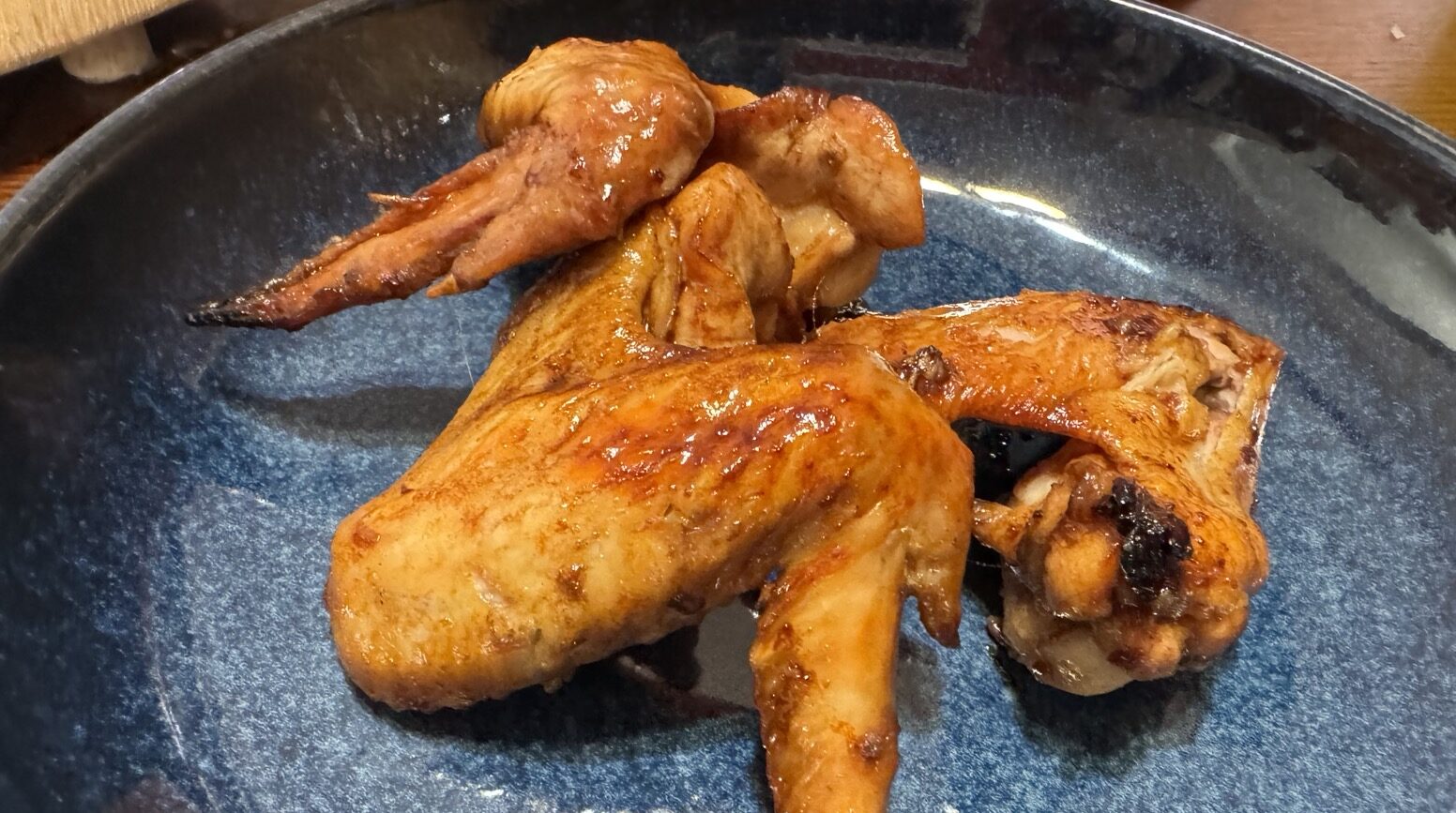
In Japan, teriyaki refers to the technique of grilling or broiling fish with a light glaze made with soy sauce, mirin and sugar. Teriyaki traveled to Hawaii with Japanese immigrants, where it adapted to the Hawaiian and American palate and available ingredients. The mirin was substituted with pineapple juice, which had the added advantage of containing enzymes which enderize meats. Garlic and ginger were also added. The glaze became thicker in America, and it used with all sorts of meats. Teriyaki chicken wings are particularly popular.
I followed a standard recipe which I found on a popular recipe website, and modified it according to the many comments. I didn't put them on the broiler at the end, as my broiler is broken, but I think it'd be a smart move to caramelize the glaze on the wings. In all, they were quite good - though I'm not sure any better than if I had just bought a commercial teriyaki sauce. Buying the pineapple juice to make them made them also more expensive.
PRINT PDF
Teriyaki Chicken Wings
Ingredients
- 1 cup pineapple juice
- 1 cup soy sauce
- 1/2 cup brown sugar
- 1/4 cup sesame oil
- 1 Tbsp minced ginger
- 1 Tbsp minced garlic
- 3 lbs chicken wings
- 1 Tbsp cornstarch
Directions
In a large bowl, whisk together the pineapple juice, soy sauce, sugar, sesame oil, ginger, garlic and 1/4 cup of water. Add the chicken wings and mix until they are fully coated. Marinade in the refrigerator for at least 1 hour or overnight.
Preheat oven to 350°F.
Transfer the wings to the rack of a roasting pan, reserving the marinade. Roast for 45 minutes. Increase heat to 400°F and roast for an additional 10- 15 minutes. Remove.
While he chicken wings are roasting, transfer the marinade to a small saucepan. Bring to a boil over medium-high heat, lower heat to medium and cook, stirring occasionally, until the sauce has thickened. Turn heat down to low, add the cornstarch and stir until the sauce acquires a syrupy consistency.
Transfer chicken wings to a large bowl and pour the sauce on them. Toss until fully covered. If desired, transfer back to the pan or the broiler and broil for 5 minutes.
|
Adapted from a recipe at allrecipes
Hawaiian Luau
Ethnic American cuisines: American, Acadians, African-American, Amish, Appalachian, Cal-Mex, Cajun, Creole, Cuban-American, Floribbean, German-American, Hungarian-American, Irish-American, Italian-American,
Jewish American, K-Mex, Korean-American, Mexican-American
Japanese cuisines I've explored so far:
Japanese | Kansai | Kanto | Kyushu
Posts on Japanese food from my blog.
Do you have a comment on this recipe? Please make it here