Indonesia
Other Cuisines
Marga's Food

marga@lacabe.com
| Located northeast of Java, the Indonesian island of Madura is known for its limestone landscapes and bull racing tradition. The Madurese people speak their own language and are mostly Sunni Muslims. Madura lacks productive land, so agriculture is poorly developed in the island. Instead, the Madurese raise livestock, in particular cattle, goats, horses and poultry. Women are traditionally charged with herding cattle. Madura is a salt producing region, and Maduran dishes tend to be saltier than other Indonesian creations.
Madura is famed as the home of satay, and both chicken and lamb satay are popular in the island.
For my quick sojourn into the cuisine of Madura, I thus made:
Satay Ayam Madura
Madura-style Chicken Satay
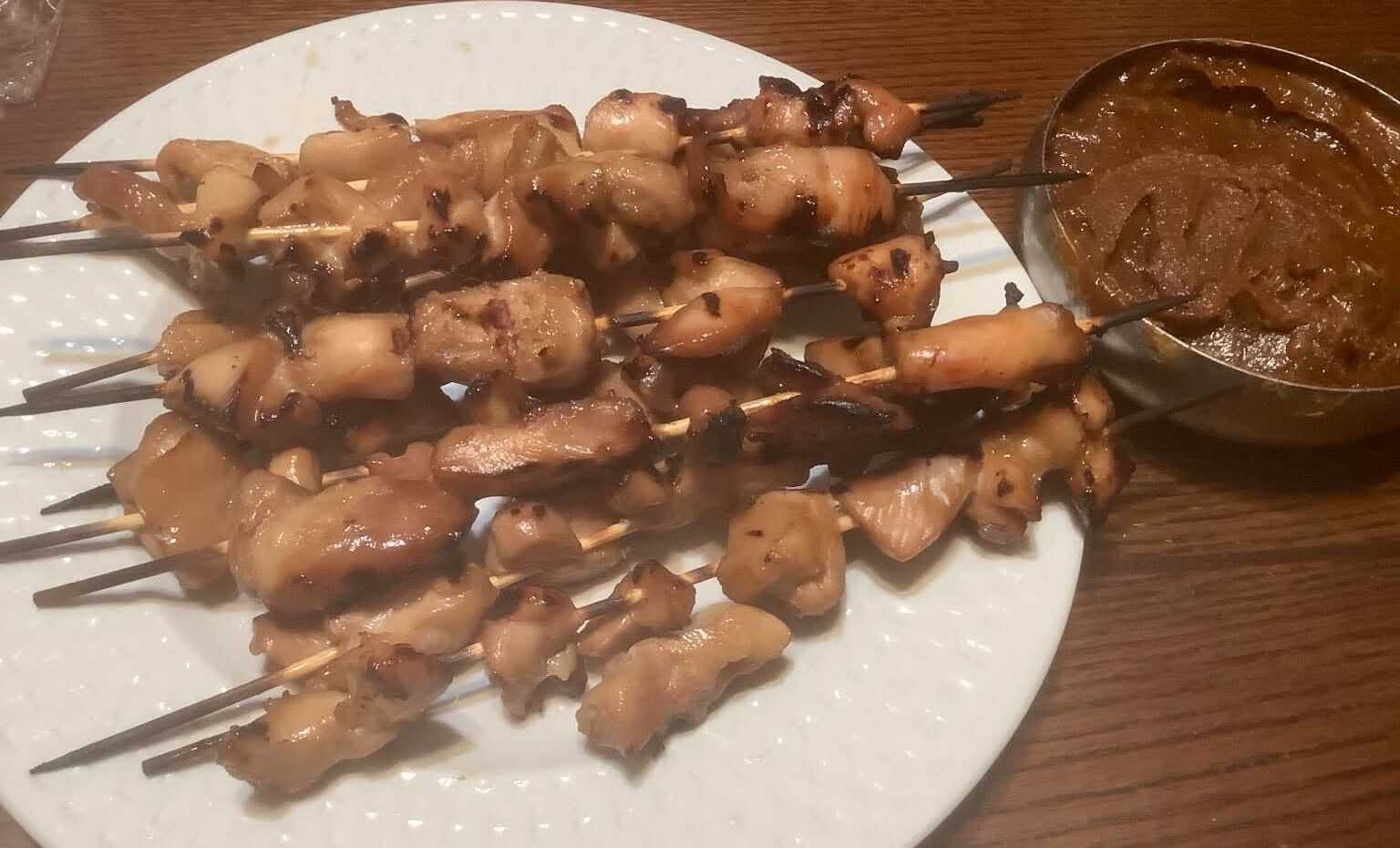
This is a comparably simple - and sweet - version of chicken satay. Kecap manis, or sweetened soy sauce, is the main ingredient. You can usually buy this under either name at Asian supermarkets or online.
The glace in the recipe is not strictly necessary. I found this out as I brought out the bowl to the grill covered with a paper towel, thinking this would be effective against any flying bug. It was, but the ants found it right away and they were able to easily climb the glass walls of the bowl and get inside without my noticing. Heed this as a warning to use a tight lid in whatever container you use for the glace and cover it right away.
The peanut sauce was easy to make but a little strange. It was definitely too sour after adding 2 tsp of tamarind paste, so if I made it again I'd start with one. I "fixed" it by adding some more peanut butter, but I think I still prefer "normal" peanut sauce. This was, all in all, a very enjoyable meal. You will need to cook the chicken in batches unless you have a huge grill.
PRINT PDF
Madura-style Chicken Satay
Ingredients
For the chicken
- 3 lbs boneless, skinless chicken thighs, cut into 1" cubes
- 3/4 cup kecap manis, divided
- 1 lime, zested and juiced
- 3/4 tsp salt
- 3/4 tsp black pepper
- 30 bamboo skewers
- 2 Tbsp coconut oil
For the peanut sauce
- sunflower or vegetable oil
- 2 long red chilies, trimmed, seeded and minced
- 1 garlic clove, peeled and crushed
- 1 cup natural peanut butter
- 1/4 cup kecap manis
- 1- 2 tsp tamarind paste
- pinch of sea salt
Directions
Marinade the chicken
Place the chicken cubes in a large bowl. Add 1/2 cup kecap manis, the lime zest, salt and pepper. Mix well and marinade in the fridge for at least one hour.
Soak the skewers in water in a plate large enough to fit them.
Make the glace
Meanwhile, place the remaining 1/4 cup kecap manis and the lime juice is a small saucepan. Heat over high heat until thickened. Set aside.
Prepare the peanut sauce
Heat oil in a small saute pan over medium heat. Add the minced chilies and garlic and sauté until softened, about 4 minutes. Transfer to the bowl of a mini chopper, food processor or blender.
Add the peanut butter, kecap manis, tamarind paste and salt. Pulse blend once and add 1 Tbsp water Repeat, adding a total of 1/3 cup of water. Continue blending until the sauce is fully blended. Adjust kecap manis and salt as needed.
Grill the chicken
Remove chicken from the fridge and let come to room temperature, about 15 minutes.
Thread 4 to 5 pieces of chicken in each skewer. Brush lightly with coconut oil.
Prepare the grill for indirect heating. Heat one side of the grill to high. Brush the grates on the other side with coconut oil. Place the skewers on the oiled side and grill for 6 to 8 minutes, turning every couple of minutes. As it cooks, brush the chicken with the prepared glace. Remove from the grill, cover with aluminum foil or a kitchen towel and let rest for 5 minutes.
Serve the skewers with the peanut sauce.
|
Adapted from Lara Lee's recipe in Coconut & Sambal: Recipes from My Indonesian Kitchen as posted in
The 5 Tastes Table
Other satay recipes: Burmese, Curaçao, Jakartan, Lombokish, Thai
Related cuisines I've explored so far: Ambonese,
Balinese, Bruneian, Cocossian, Dayak, Indonesian, Jakartan, Javanese, Kalimantan, Kelantanese, Lombokish
Do you have a comment on this recipe? Please make it here
|