Other Cuisines
Marga's Food

marga@lacabe.com
| The Guarani are an American indigenous people who originated in the Amazon region and migrated south to what is now eastern Bolivia, Paraguay, northeastern Argentina, southern Brazil and northern Uruguay about fifteen hundred years ago. They are divided into several linguistic groups, with self-governing communities. After the Spanish and Portuguese conquest, many Guaranis were dispossessed of their lands and enslaved. While there are about a hundred Guarani villages in Argentina and over 300 in Bolivia, many Guaranis have been forced to leave their lands and work or beg in the cities.
Despite the horrible conditions to which Guaranis are subjected to, the Guarani language is one of the two official languages in Paraguay, and the mostly while and mestizo Paraguayan population is bilingual.
The Guaranis have mostly lived in relatively small communities in the rain forest and live on survive through subsistence agriculture complemented by the meat of wild animals hunted, trapped or fished. Their main staples are cassava and corn, but they also grow sweet potatoes, beans and different types of melons. Currently, they raise chickens (and sometimes peccaries, if they are able to trap them while young), fish in the river and hunt for peccaries and tapirs, deer and coaties. Traditionally, they also hunted capybaras, using both their meat and skin, but this is now illegal. Cooking is usually done over wood fires.
Many of the dishes mostly associated with Guaranis, however, are those they developed after colonialism. Guarani workers in yerba mate plantations, for example, developed reviro, a dish of wheat or corn flour mixed with oil and water and cooked on a pan. This is still a staple in Guarani communities, though now it sometimes is eaten with a fried egg.
The dish I decided to make for my quick exploration into Guarani cuisine, has a similar history. It's
Chipá
Guarani Cheese Bread
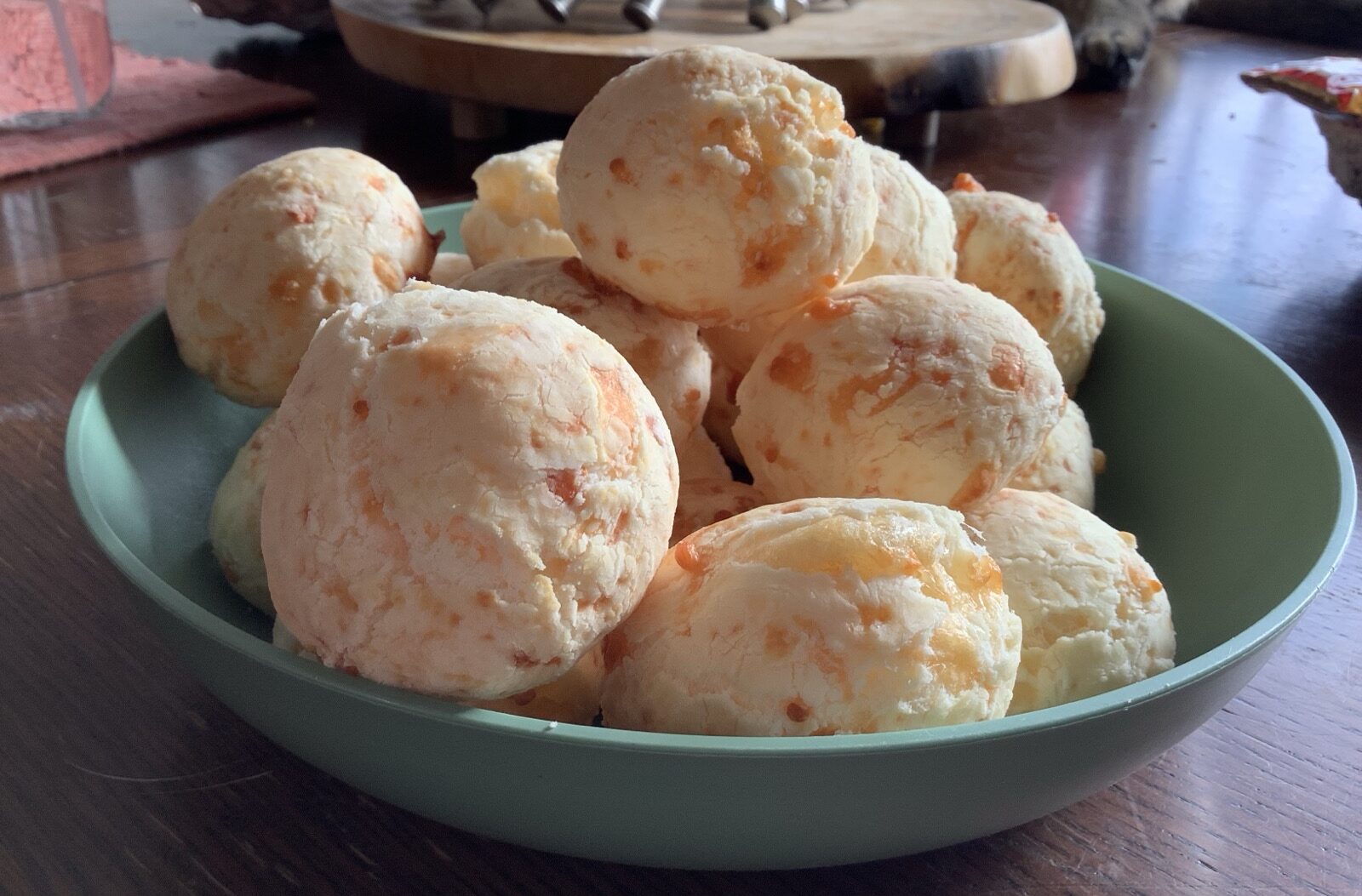
Americans have recently become acquainted with chipá through its close cousin pão de queijo or Brazilian cheese bread. It has its origin in ancient mbujape, a bread made from tapioca and cooked in corn leaves over ashes. After colonization, the Guaranis were introduced both to diary products and to the concept of ovens in the Jesuit missions where they were forced to work. They eventually put the two together and created chipá.
There are, as you would expect, endless varieties of chipa. I made a traditional Argentine version, though obviously with American ingredients. Surprisingly, it tasted very much like the chipa I had in Corrientes and Misiones. This is not necessarily a good thing. Chipa is very dry and I'm not super fond of the sweetish taste of the tapioca. I do dig the chewy texture here - but only because it's balanced by the hardened crust. Despite the amount of cheese used, it still doesn't taste cheesy enough. I used Monterey Jack, but any semi-hard cheese will do.
PRINT PDF
Chipá (Guarani Cheese Bread)
Ingredients
3 1/2 cups tapioca (cassava starch), plus more for dusting
- 1 egg
- a pinch of salt
- 1 1/4 cup shredded Parmesan or another hard cheese
- 1 cup shredded semi-hard cheese (e.g. cheddar, Monterey Jack, etc.)
- 1/2 cup Tbsp milk
Directions
Preheat oven to 400°F. Using a little bit of the butter, grease two baking sheets or cover with parchment paper. Put the rest of the butter in a large mixing bowl and mash to soften. Add the rest of the ingredients and mix well, using your fingers if necessary.
Using your hands, roll the dough into equal size balls.
Bake until golden, about 15 to 25 minutes, depending on the size of your chip´.
|
Adapted from a recipe at Wines of Argentina
Related cuisines I've cooked so far: Argentine, Bolivian, Chilean, Colombian, Costa Rican, Cuban, Dominican Republic, Ecuadorian, French Guianese, Garifuna, Guatemalan, Guyanese, Hondurean
Do you have a comment on this recipe? Please make it here
|