A Cree encampment in 1857, photo from the H. Y.
Hind expedition
An Algonquian- speaking people, the Cree are currently the largest of Canada's first nations. Traditionally, they lived in what is now Manitoba, between the Hudson Bay and Lake Winnipeg, but they greatly expanded their territorial scope in the 17th and 18th century after becoming involved in the fur trade with Europeans and acquiring firearms. By the 19th century, they occupied much of Eastern and Central Canada.
The Cree were culturally divided between two main cultures, the Sakâwiyiniwak, or Woodland Cree, and the Paskwâwiyiniwak, or Plains Cree. Both groups were nomadic hunters, trappers and gatherers, who followed their preferred prey with the seasons. The Woodland Cree relied mostly on hare, but they would also hunt caribou, moose, bear and beaver when available. Women gathered nuts and berries. The Plains Cree concentrated on hunting bison. Coastal Crees also engaged in fishing and seal hunting, while some southern Creek cultivated maize.
In addition to utilizing fresh meats, the Cree would make pemmican, a type of energy bar consisting of dried and pounded meat, animal fat and, sometimes, berries. Some Cree today continue to make it.
In the late 19th century, the Canadian government undertook a campaign of removing the Cree and other indigenous people from their territories and forcing them into reservations. Like the Americans, they undertook mass killing
of bison to deprive the Plains Cree of their source of food and force them to sign treaties. Once in reservations, they had to rely on subsistence agriculture and government rations.
For my quick sojourn into Cree cuisine, I made:
Bannock Bread with Berry Compote
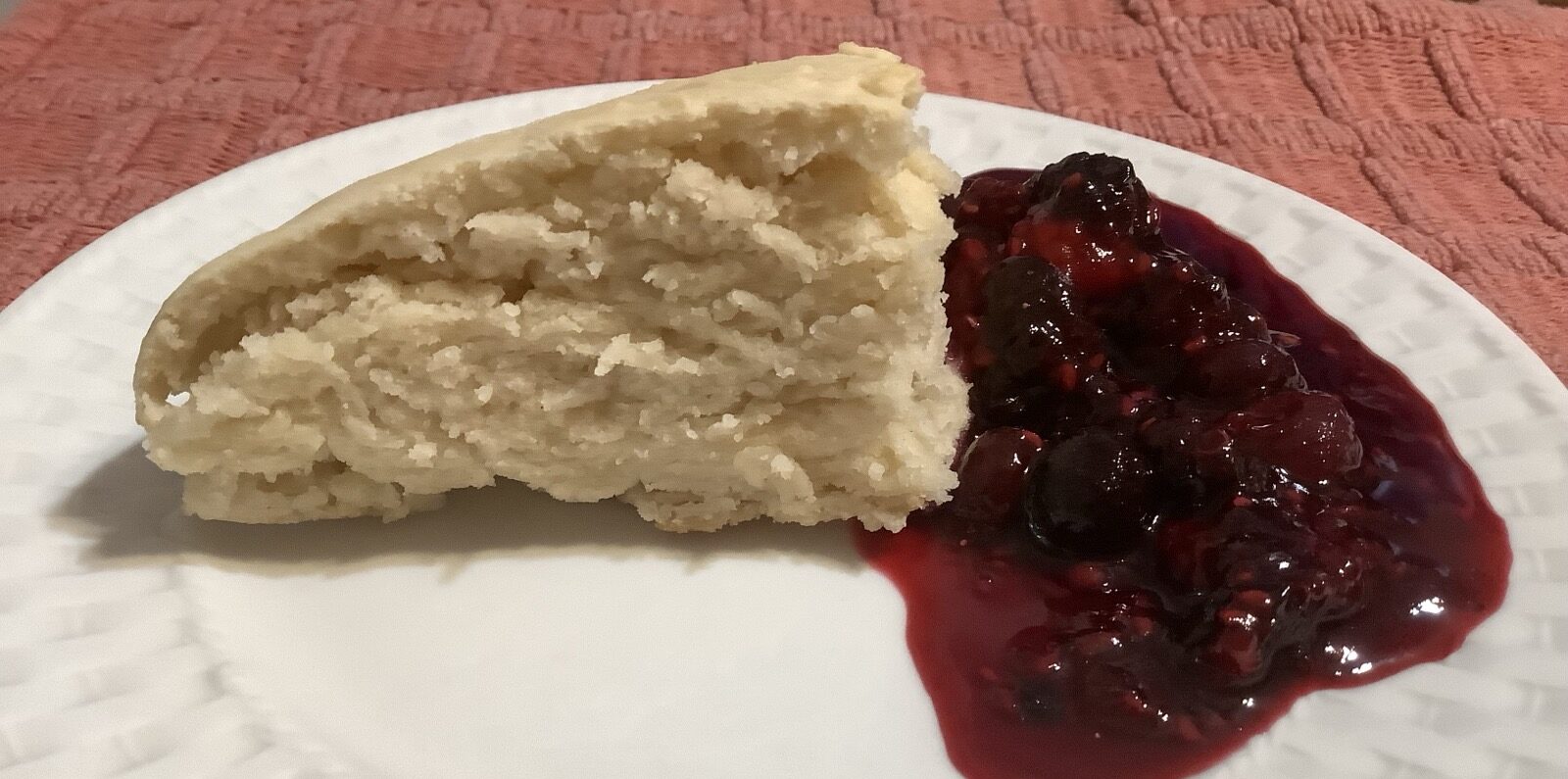
Bannock is a quick bread similar to biscuits, but cooked as a flat loaf, historically eaten in Great Britain. Scottish fur traders
introduced them to the indigenous people they traded with in what is now Canada, including the Cree. Bannock became a particularly important part of the Cree diet after the Cree were forced into reservations and had to rely on
government rations which included wheat flour, lard and sugar. Today, bannock bread holds a lot of significance for the Cree and other first nations in Canada and it's greatly associated with them in the Canadian mind.
Unlike fried breads in America, bannock bread is commonly baked in an oven. While it's not usually a dessert, I liked the idea of eating it with a berry compote - the Cree have gathered and eaten berries since time immemorial.
The bread was fairly easy to make and quite good with the compote, I kept taking chunks of it and dipping it in the compote all day long. This recipe probably makes one third as much compote as you would need for the whole
loaf of bread, but you can eat the rest with soup, use it as a bun (if so, you might want to spread it thinly before baking), or in whichever way you'd use a bread or biscuit. I should note that it is much denser than regular
biscuits or bread, however.
PRINT PDF
Bannock Bread with Berry Compote
Ingredients
For the bannock
- 2 cups flour
- 1 1/2 Tbsp baking powder
- 1/2 tsp sugar
- 1/2 tsp salt
- 1 3/4 cup warm water
- 1/2 cup cooking oil
For the berry compote
- 2 cups fresh or frozen berries of your choice
- 1/2 cup sugar
- juice and rind of 1/2 lemon
- pinch of salt
Directions

Prepare the bannock
Preheat oven to 450°F. Grease a baking sheet.
Place flour, baking powder, sugar and salt in a large bowl and mix well. Make a well in the center and add the water and oil to this well. Using a fork, mix well, until all ingredients are combined. Using your hands, slap and knead it into a uniform and flexible dough. Allow to rise for five minutes. Transfer to the prepared baking sheet and tap with your hands until it spreads. Poke all over with your fork.
Bake for 15 to 20 minutes.

Prepare the berry compote
Add the berries to a medium saucepan and cook over medium heat until soft. Add the sugar, lemon juice and rind and a pinch of salt. Cook, stirring, until the sugar is dissolved.
Serve the berry compote over the bannock.
|
Adapted from a recipe in TikTok and another at the Wandering Wagars.
North-American Indigenous cuisines I've cooked so far:
Choctaw, Iroquoian, Kiowa
Canadian cuisines I've cooked so far: Canadian, Kashubian-Canadian
Do you have a comment on this recipe? Please make it here